
Port Logistics in Montreal: Why Execution Makes All the Difference
Updated: Feb 10
In industrial transport and port logistics, success is not driven by price alone.At the Port of Montreal, real value lies in execution: coordination, precision, and the ability to manage the unexpected without delaying a project.
Between port appointments, oversized containers, tight timelines, and site constraints, a poorly planned operation can quickly generate significant costs.
Understanding the Reality of the Port of Montreal
The Port of Montreal is a strategic hub for industrial imports and exports across Quebec and Canada. It handles:
Standard and out-of-gauge containers
Flat racks and open-top containers
Heavy or sensitive cargo
Strict schedules imposed by terminals (MGT, CN, CP)
In this environment, port logistics is not simply about moving a container. It requires a global project view, from the quay to the final destination.

Destuffing, Transloading, and Coordination: A Specialist’s Job
Container destuffing is often underestimated. Yet it is a critical step, especially for:
Industrial equipment
Long or heavy components
Cargo requiring precise handling
Poor coordination can result in:
Terminal delays
Unnecessary storage costs
Cargo damage
Job-site delays
That’s why destuffing must be integrated into a complete logistics strategy, involving the right equipment, the right location, and the right timing.
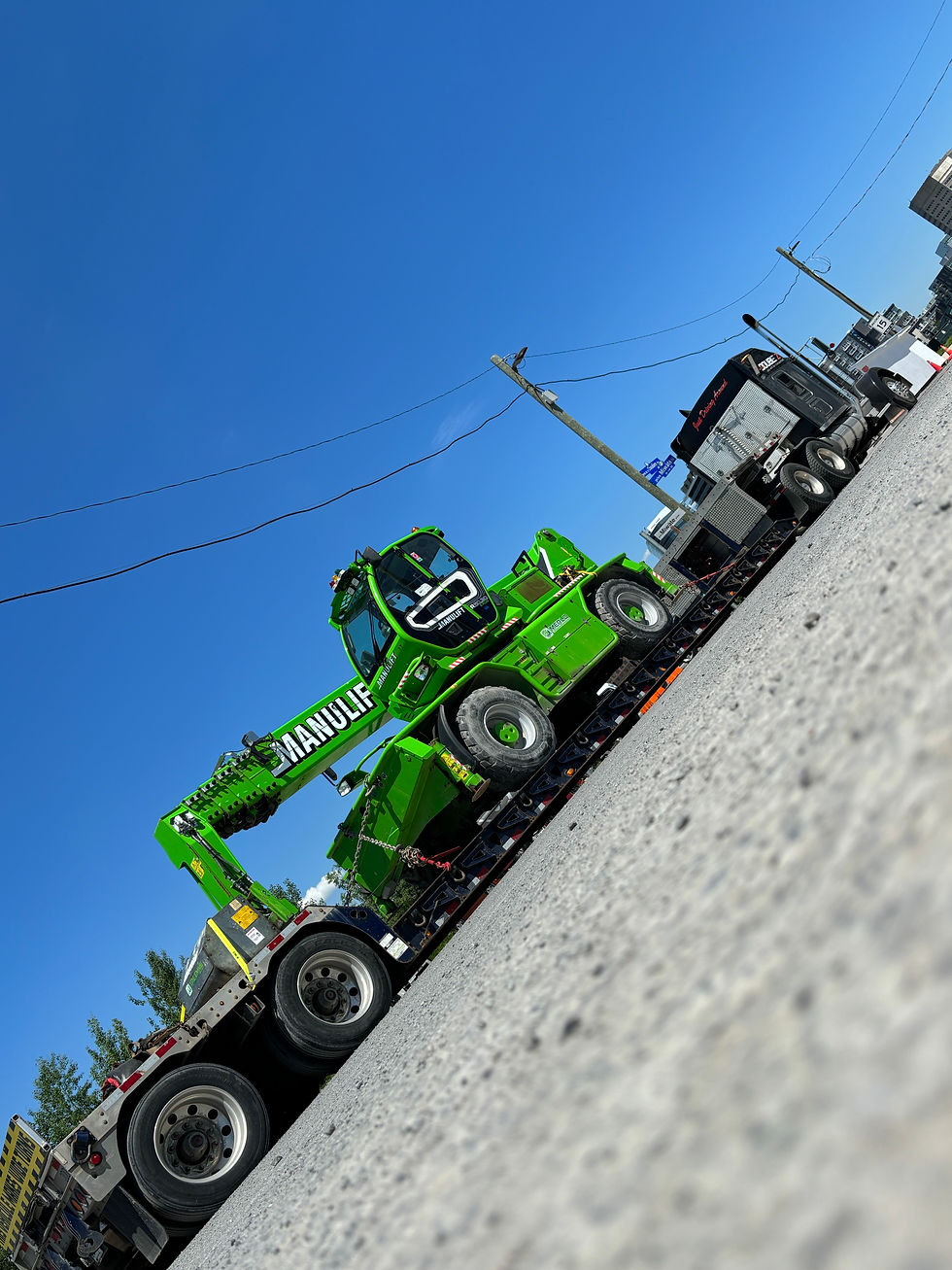
Specialized Transport: More Than Just a Truck

Specialized trailers
Flat rack solutions
Roll-tite equipment for sensitive cargo
Proper protection adapted to the freight
But beyond equipment, planning is what makes the difference: permits, routing, crane coordination, delivery windows, and final site constraints.
Crane Coordination and On-Site Delivery
In many industrial and construction projects, delivery does not stop at the gate. It includes:
Precise delivery appointments
Coordination with lifting crews
Limited intervention windows
Zero tolerance for errors
A delayed delivery can immobilize an entire crew, postpone an installation, or jeopardize a critical schedule.
Well-executed logistics ensures a smooth transition between port operations, transport, and the job site.
The Turnkey Approach: A Strategic Advantage
More and more companies are seeking turnkey solutions capable of managing:
Port logistics
Specialized transport
Destuffing and transloading
Temporary storage
Final on-site delivery
This approach reduces intermediaries, limits risk, and improves visibility across the entire project lifecycle.

Why Execution Is the True Success Factor
In an environment where every hour counts, logistics becomes a strategic lever.The companies that succeed are those that work with partners who can:
Anticipate constraints
Communicate clearly
Adapt quickly
Deliver without compromising safety or precision
At the Port of Montreal and on industrial job sites alike, execution makes all the difference.
📌 Conclusion
Port logistics and specialized transport demand field expertise, rigorous planning, and flawless execution.In an increasingly complex market, choosing the right logistics partner is a key performance driver.
Follow Our Operational Work
Real transport execution, equipment handling, and field conditions are documented through our official channels:
Facebook – https://www.facebook.com/DoubleZTransport

❓ Questions & Answers – Port Logistics & Container Destuffing at the Port of Montreal
Q: Why isn’t price the only determining factor in port logistics?
A:At the Port of Montreal, real value lies in execution. Poor coordination can quickly lead to delays, storage fees, port penalties, and job-site disruptions. Well-executed logistics, on the other hand, protect schedules and significantly reduce indirect costs.
Q: What are the main logistical constraints at the Port of Montreal?
A:Operations must deal with strict terminal appointments, multiple container types (standard, out-of-gauge, flat racks, open tops), heavy or sensitive cargo, and terminal-specific requirements (MGT, CN, CP). Every step must be precisely planned.
Q: What is container destuffing and why is it a critical step?
A:Container destuffing is the process of unloading cargo from a maritime container. For industrial equipment or heavy cargo, this step is critical. Poor execution can result in cargo damage, terminal delays, and unnecessary costs.
Q: What types of cargo require specialized destuffing?
A:Specialized destuffing is essential for:
industrial equipment
long or heavy components
high-value cargo
cargo requiring crane handling
Q: How does specialized transport go beyond standard trucking?
A:Specialized transport involves selecting the proper trailer (flatbed, roll-tite, specialized trailers), managing permits, route planning, crane coordination, and complying with final site constraints. It is as much about planning as it is about execution.
Q: Why is crane coordination so important?
A:Lifting operations operate within very tight time windows. A delay can immobilize entire crews on a job site. Proper coordination ensures safe unloading, efficient operations, and uninterrupted project timelines.
Q: What are the advantages of a turnkey logistics approach?
A:A turnkey solution centralizes port logistics, specialized transport, destuffing, transloading, temporary storage, and final delivery. This reduces intermediaries, limits risk, and improves overall project visibility.
Q: Why is execution the true success factor in port logistics?
A:In an environment where every hour matters, the ability to anticipate constraints, communicate clearly, and adapt quickly makes all the difference. Flawless execution protects cargo, meets deadlines, and ensures project success.
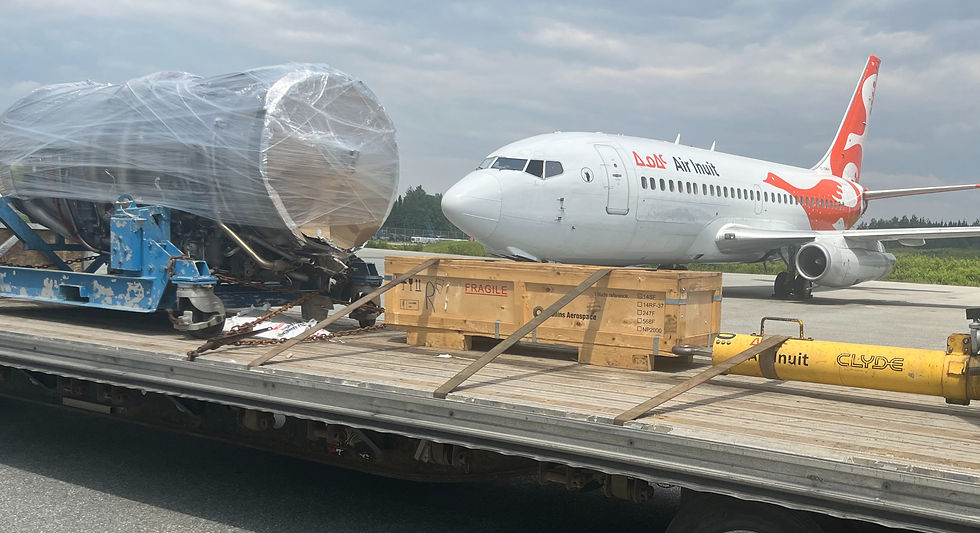
About This Transport ServiceThis article documents real-world roll-tite step deck transport used for sensitive and high-value cargo, including machinery, aerospace components, and food-grade equipment.
Double Z Transport & Logistique provides specialized transport solutions across Québec and Ontario, with a focus on proper equipment selection, securement planning, and route feasibility based on real clearance and weather constraints — not assumptions.

Comments