
Container Destuffing and Flatbed Reloading in Montreal Port Logistics
Updated: Feb 11
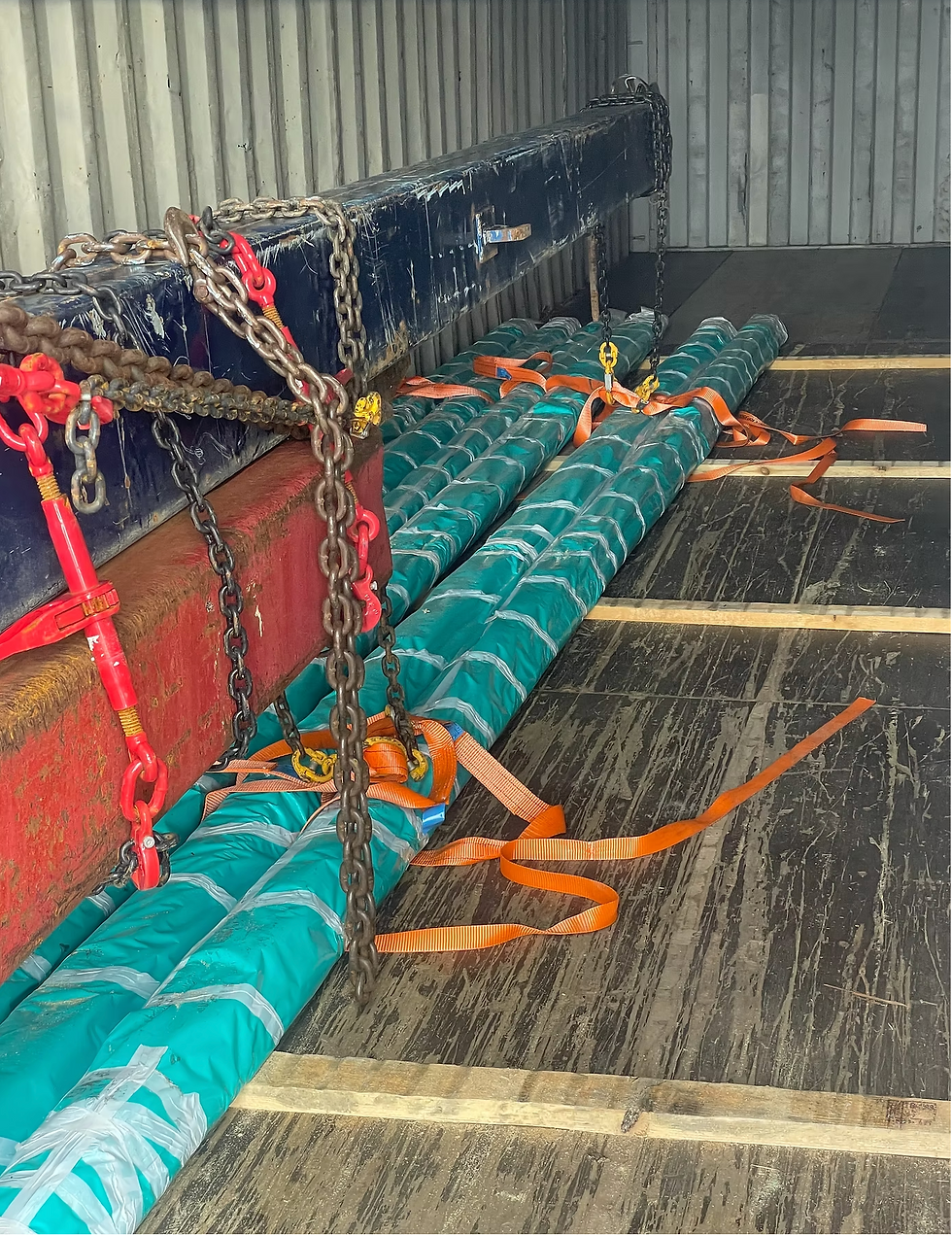
In port logistics and specialized transport, container destuffing and flatbed reloading are never simple handling tasks.They are critical operations requiring planning, precision, and on-site coordination, especially for long, heavy, or oversized industrial cargo.
At the Port of Montreal, poor execution at this stage can quickly lead to delays, cargo damage, and unexpected costs.
Container destuffing and flatbed reloading at the Port of Montreal require technical coordination between terminal operators, lifting crews, and specialized transport equipment. These operations are not simple cargo transfers — they are structured logistics procedures that directly impact delivery timelines and project efficiency.
When container destuffing and flatbed reloading are executed correctly, cargo integrity, regulatory compliance, and road safety are preserved from port exit to final job site.
Container destuffing at the Port of Montreal is often the first step in a broader logistics chain.
After unloading the marine container, freight may require strategic reconfiguration depending on its final destination, protection requirements, or job site conditions.
For cargo that requires full weather protection during domestic transport, we integrate👉 roll-tite step deck transport to ensure covered and controlled delivery across Quebec and Ontario.

Container Destuffing and Flatbed Reloading: More Than a Simple Transfer
When cargo arrives in a container and must be reloaded onto a flatbed, multiple factors must be considered:
Oversized dimensions and weight
High-value or sensitive cargo
Lifting and handling constraints
Proper equipment selection (flatbed, rigging, protection)
Strict terminal schedules (MGT, CN, CP)
Every detail matters. Lift angles, positioning, and load securement define the success of the operation.
Safety, securement, and cargo protection
Flatbed reloading requires a disciplined approach:
Certified load securement adapted to the cargo
Protection against weather and vibration
Proper weight distribution
Road-transport-ready preparation
Improper securement can compromise safety, regulatory compliance, and project timelines.
When the shipment involves industrial equipment that must be positioned precisely or unloaded autonomously on site, we coordinate.
👉 machinery transport with self-loading trailers as part of the logistics plan.
Container destuffing and flatbed reloading are not isolated services. They connect port operations to specialized transport, ensuring operational continuity from terminal to final delivery.
Get a Quote At Double Z Transport & Logistics, destuffing and reloading are part of a complete logistics strategy:
Container destuffing (standard, open top, flat rack)
Secure flatbed reloading and specialized equipment
Temporary storage when required
Oversized transport and final site delivery
End-to-end port and operational coordination
This turnkey approach reduces intermediaries, risk, and delays.
Why execution makes the difference
In port logistics, price alone is not enough.True value comes from the ability to:
Anticipate constraints
Adapt quickly
Communicate clearly
Deliver with precision and safety
Well-executed destuffing and flatbed reloading protect cargo, schedules, and reputations.

Learn more about👉 container destuffing and flatbed reloading in Montrealand how it integrates with specialized hauling solutions.
📌 Conclusion – Container Destuffing and Flatbed Reloading in Montreal
Container destuffing and flatbed reloading are critical operations in industrial supply chains. At the Port of Montreal, success depends on precision planning, certified load securement, and experienced coordination between port terminals and specialized transport providers.
When executed correctly, these operations protect cargo, timelines, and project budgets from vessel arrival to final delivery.
Follow Our Operational Work
Real transport execution, equipment handling, and field conditions are documented through our official channels:
Facebook – https://www.facebook.com/DoubleZTransport

❓ Frequently Asked Questions – Container Destuffing & Flatbed Reloading
Q: What is container destuffing in port logistics?
A: Container destuffing is the process of unloading cargo from a marine container in order to transfer it to another transport equipment such as a flatbed, step deck, or RGN. It is a critical operation for industrial, heavy, long, or oversized cargo.
Q: Why reload cargo onto a flatbed instead of delivering it in a container?
A: Flatbed reloading is required when cargo is oversized, overweight, too long, or not suitable for container delivery. It allows proper load securement, weight distribution, and compliance with specialized road transport regulations.
Q: What types of cargo require destuffing and flatbed reloading?
A: Steel structures, industrial equipment, manufactured components, long materials, and out-of-gauge cargo often require container destuffing followed by flatbed reloading.
Q: What are the risks of poor destuffing or improper load securement?
A: Improper execution can result in cargo damage, delays, regulatory non-compliance, additional costs, and serious road safety risks.
Q: Does destuffing at the Port of Montreal require specific coordination?
A: Yes. Operations must comply with terminal rules, port windows, and coordination between terminals (MGT, CN, CP), handling crews, and transport planning.
Q: Do you offer a turnkey service after destuffing?
A: Yes. Double Z Transport & Logistics provides a turnkey solution including container destuffing, flatbed reloading, certified load securement, temporary storage if required, and final site delivery.
Q: Do you operate only at the Port of Montreal?
A: Our core operations are based at the Port of Montreal, with deliveries across Quebec and Ontario depending on project requirements.
Q: How do you plan a container destuffing and flatbed reloading operation?
A: Planning is based on cargo dimensions, weight, lifting constraints, and real on-site conditions. Proper preparation ensures safety, regulatory compliance, and operational efficiency.
About This Transport ServiceThis article documents real-world roll-tite step deck transport used for sensitive and high-value cargo, including machinery, aerospace components, and food-grade equipment.
Double Z Transport & Logistique provides specialized transport solutions across Québec and Ontario, with a focus on proper equipment selection, securement planning, and route feasibility based on real clearance and weather constraints — not assumptions.
Comments