
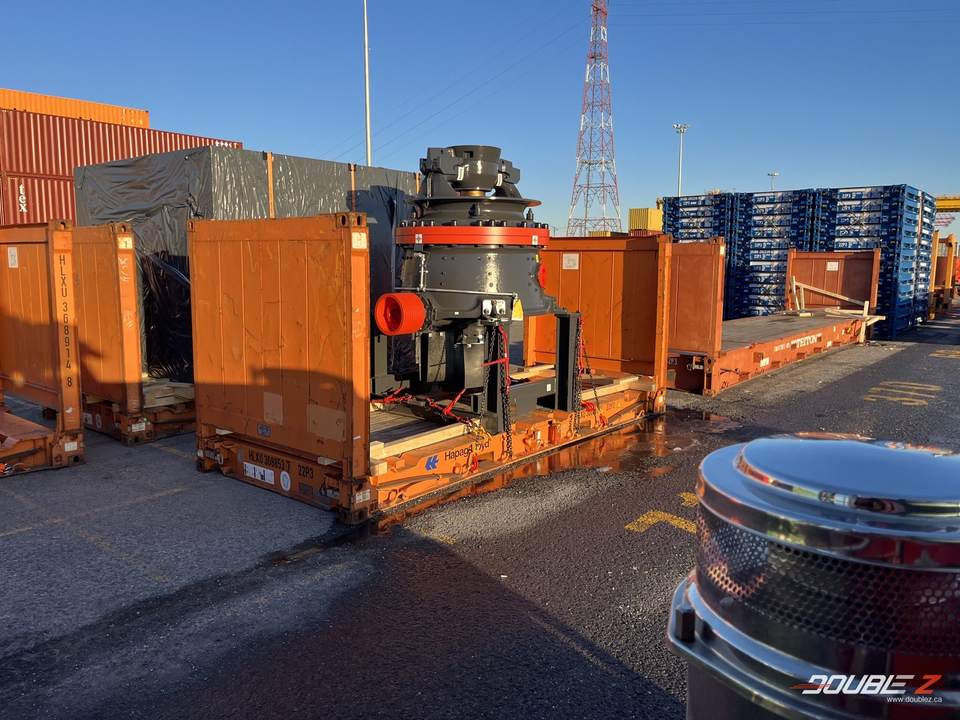
Out-of-gauge container cargo
Flat rack & open-top containers — Port of Montreal
When the cargo doesn’t fit inside a box, it ships on a flat rack or open top. Getting it off the terminal and onto the road safely is what we do best.
Flat rack and open-top containers carry the freight that standard containers can’t: machinery, crushers, transformers, boats, steel structures and project cargo that is often over-width, over-height or both.
That makes the last mile from the Port of Montreal the hardest part of the journey. The cargo usually has to be lifted off the flat rack or out of the open top, reloaded onto a step deck or double drop, and moved under special permit. We handle all of it as one job.
How we handle out-of-gauge containers
Pre-arrival review
Dimensions, weights, lifting points and photos reviewed before the vessel docks.
Terminal coordination
Appointments and special-handling requirements arranged with the terminal.
Lift & transload
Crane or lift planned for the piece, then transloaded onto the right trailer.
Whole-unit moves
Where it makes sense, the flat rack moves on a suitable trailer as-is to your site.
Permits & routing
Special permits, route surveys and escorts arranged for over-dimensional loads.
Tarping & protection
Weather protection, edge protection and load securement for the road leg.
Flat rack vs. open top — what changes for transport
Flat racks have end walls but no sides or roof, so cargo can overhang the width and height of the container. They are typically loaded and unloaded by crane from the side or top. Open tops have walls but a removable tarp roof, so tall cargo is lowered in from above — and must be lifted out the same way.
In both cases, the road leg is usually where dimensions become a legal issue: once cargo is 103 in (8 ft 7 in) wide or more, the load is oversize and needs a permit, and past 146 in (about 12 ft) wide an escort might be required, depending on the road, the rules and the regulations. For the height, it depends on the trailer: we plan the permits and choose the right equipment. Planning that before the release is what keeps the container from sitting on the terminal.
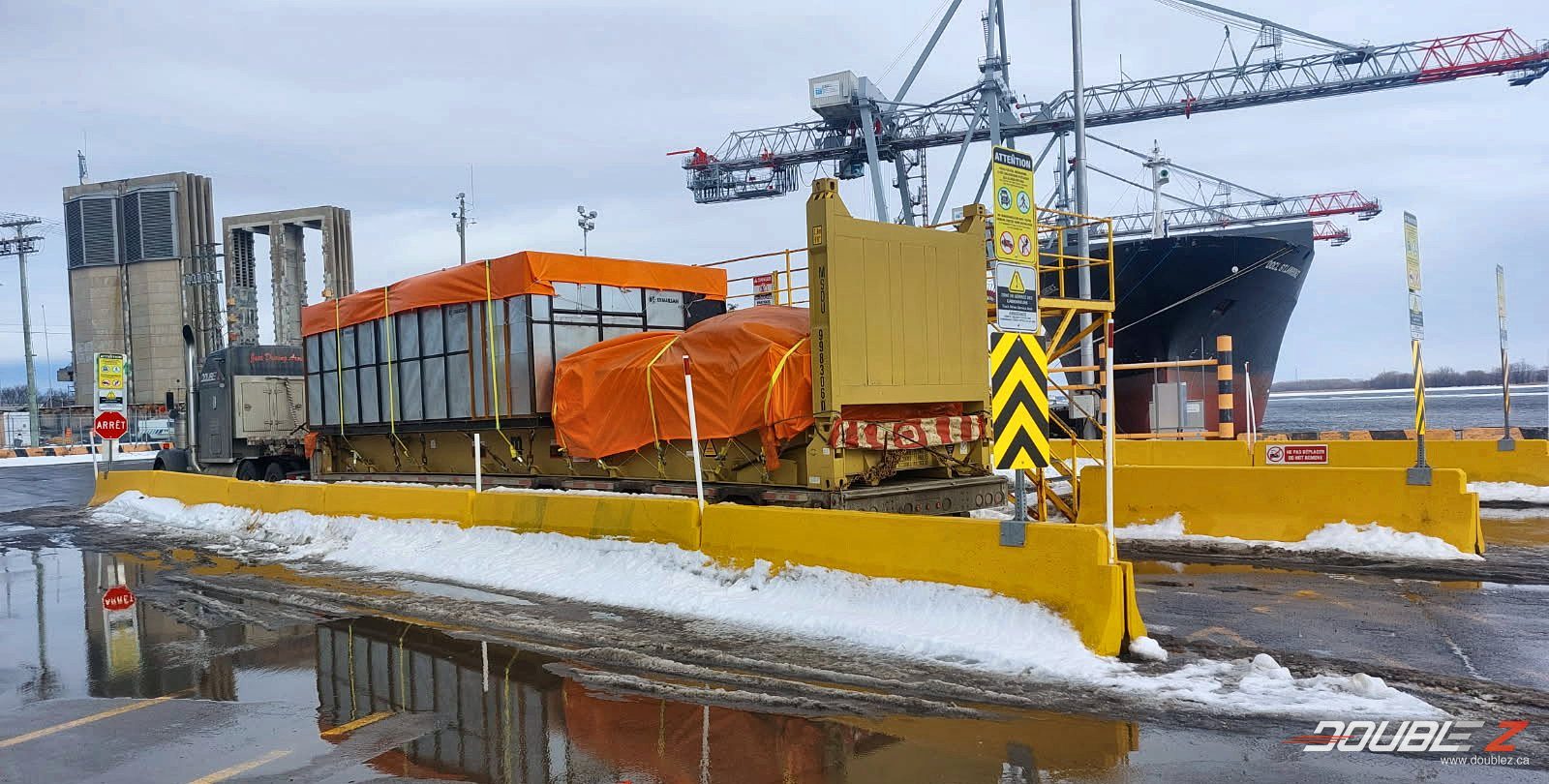
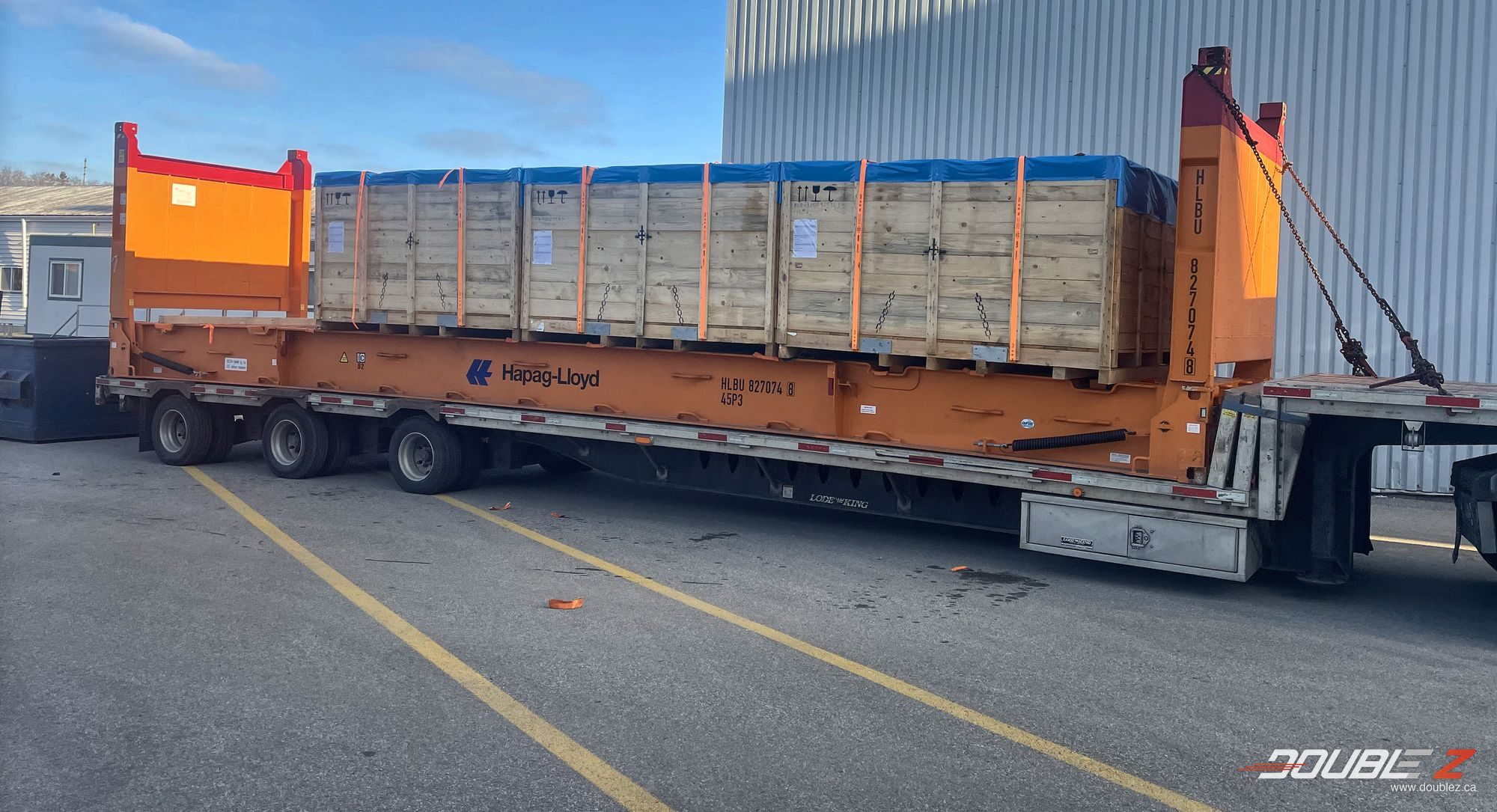
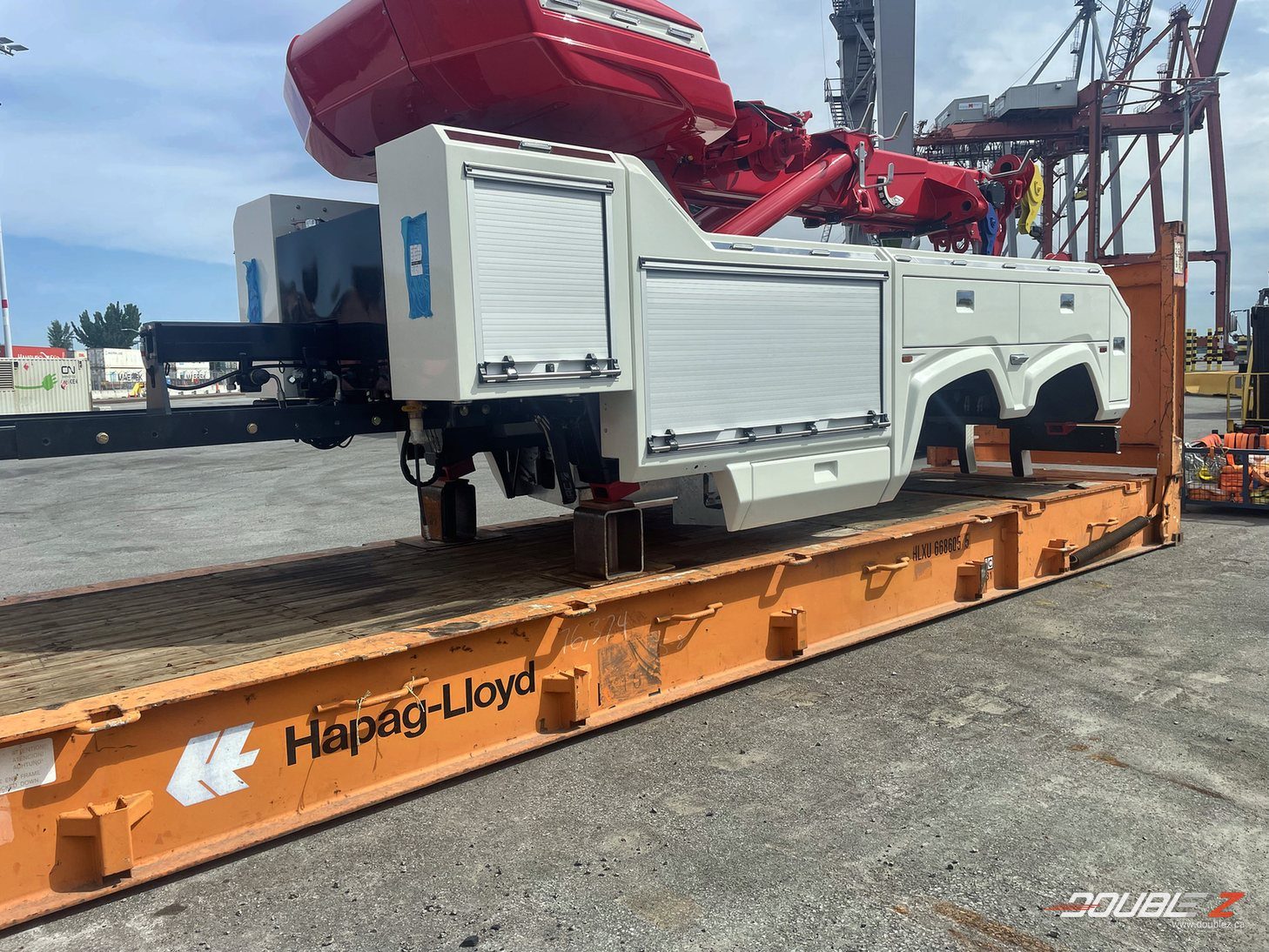
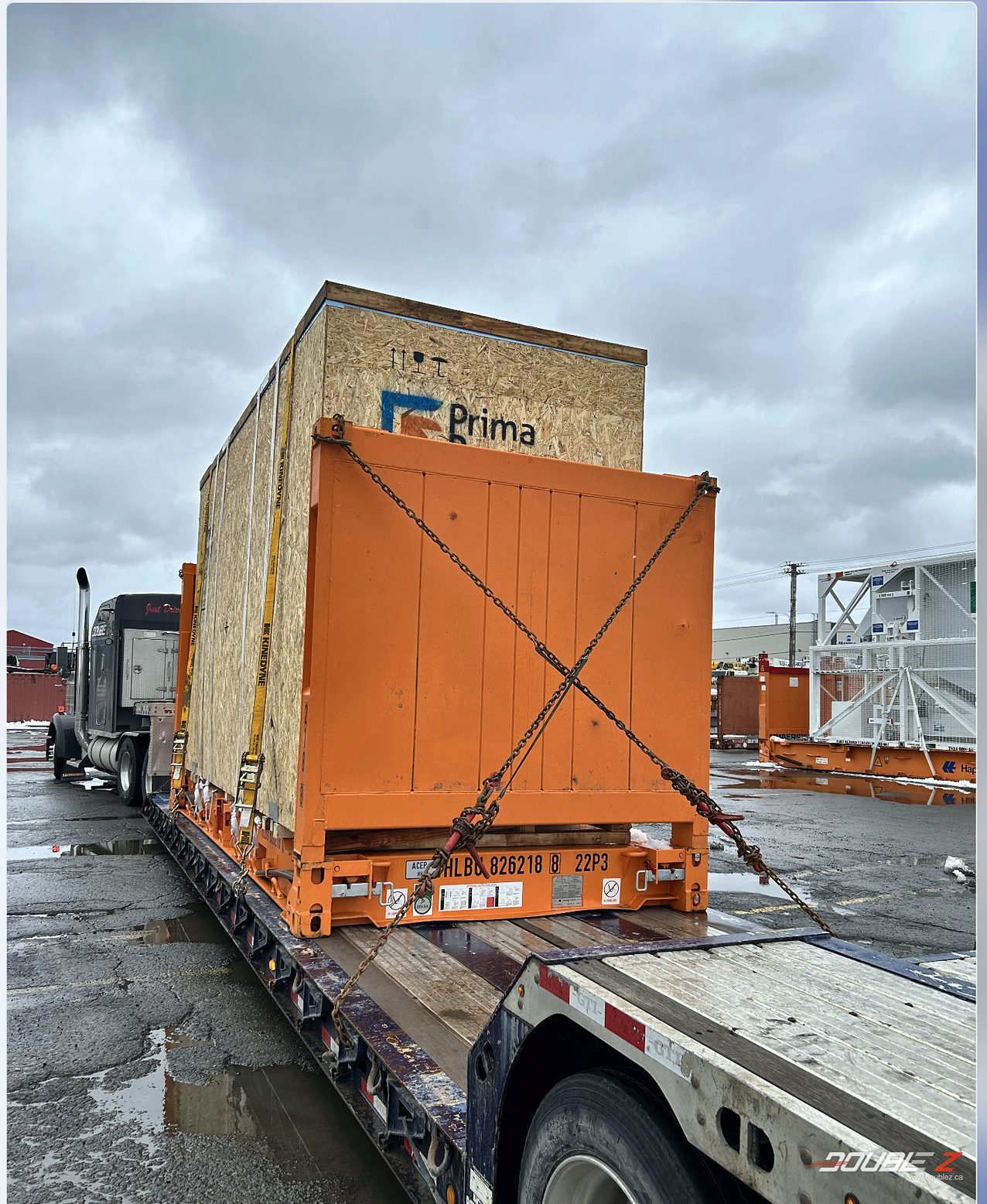
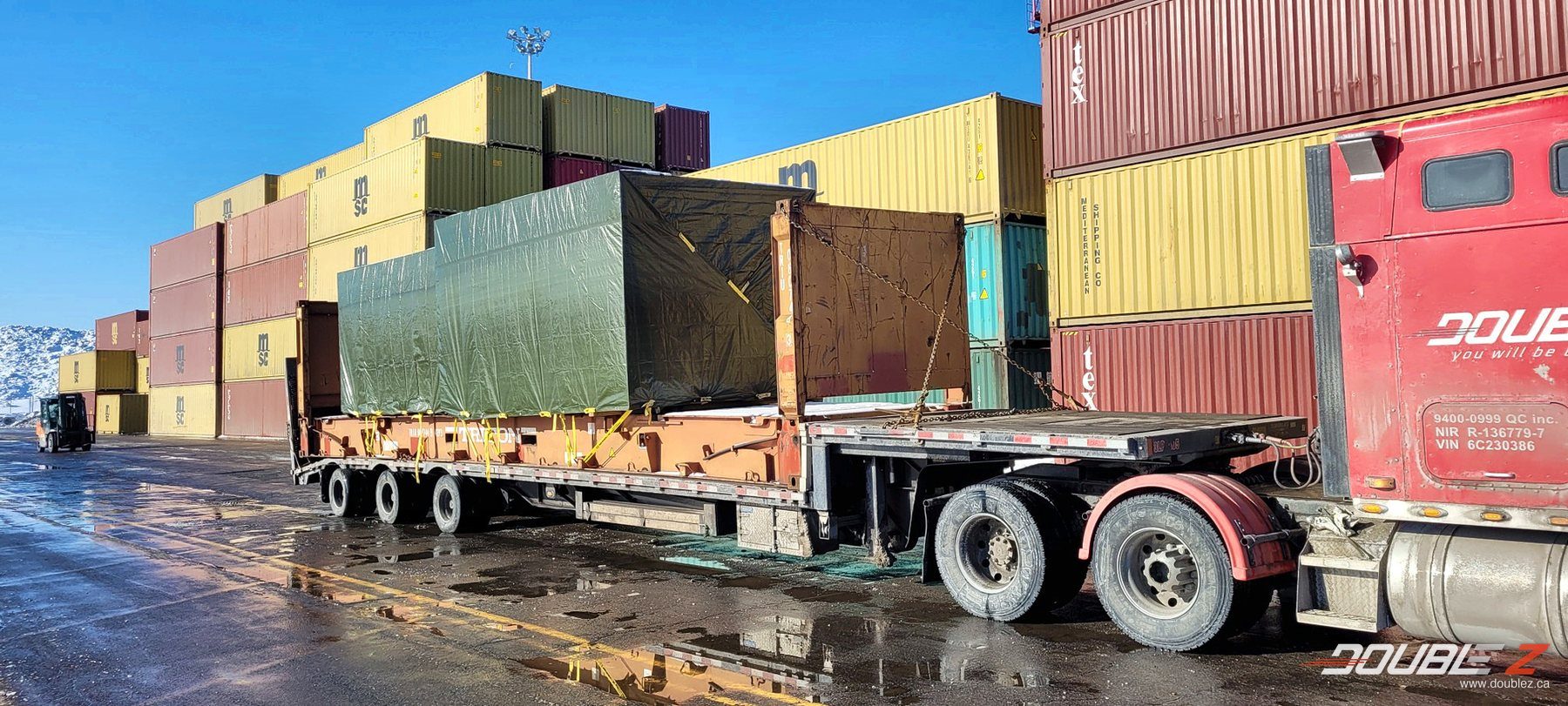
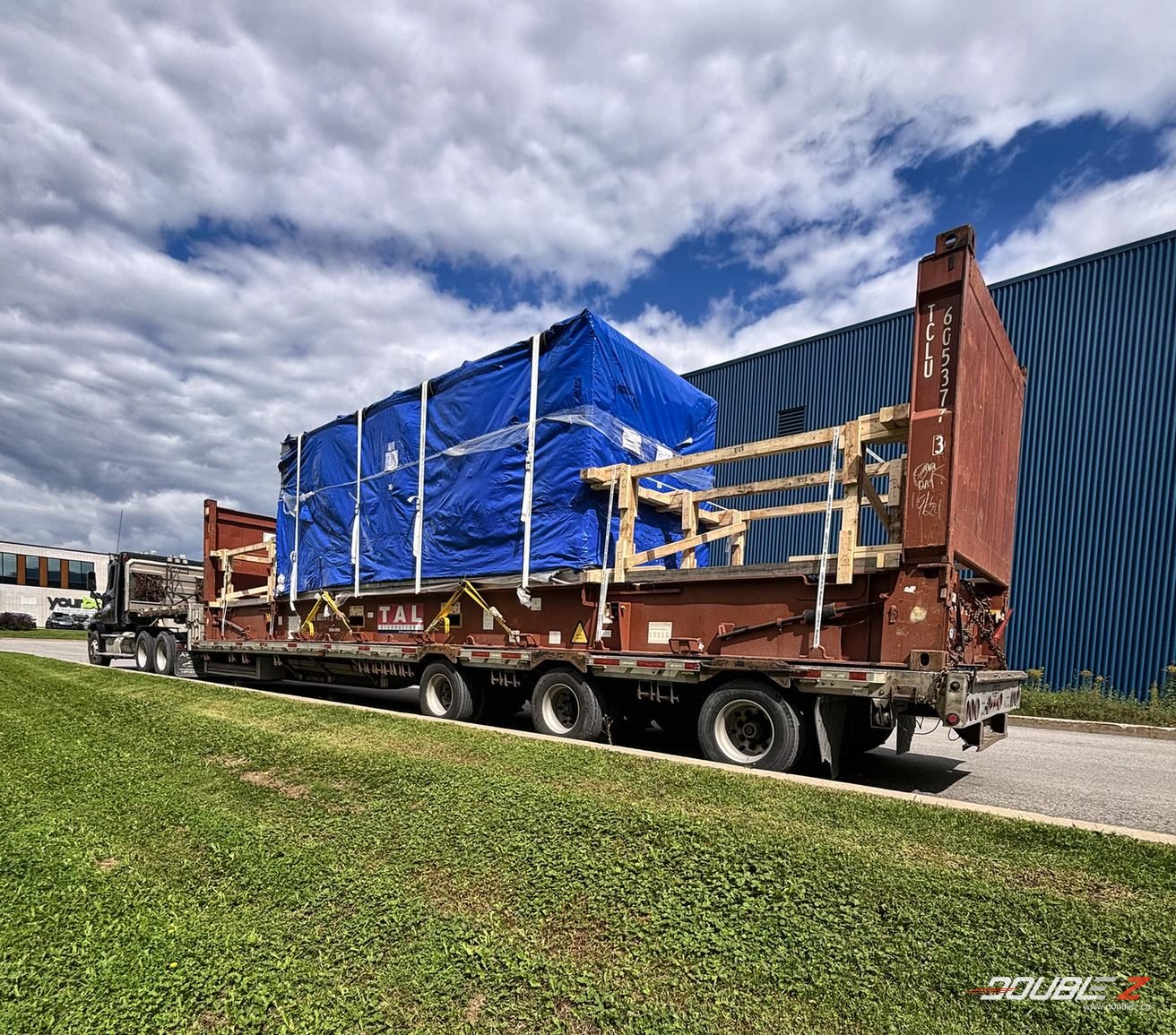
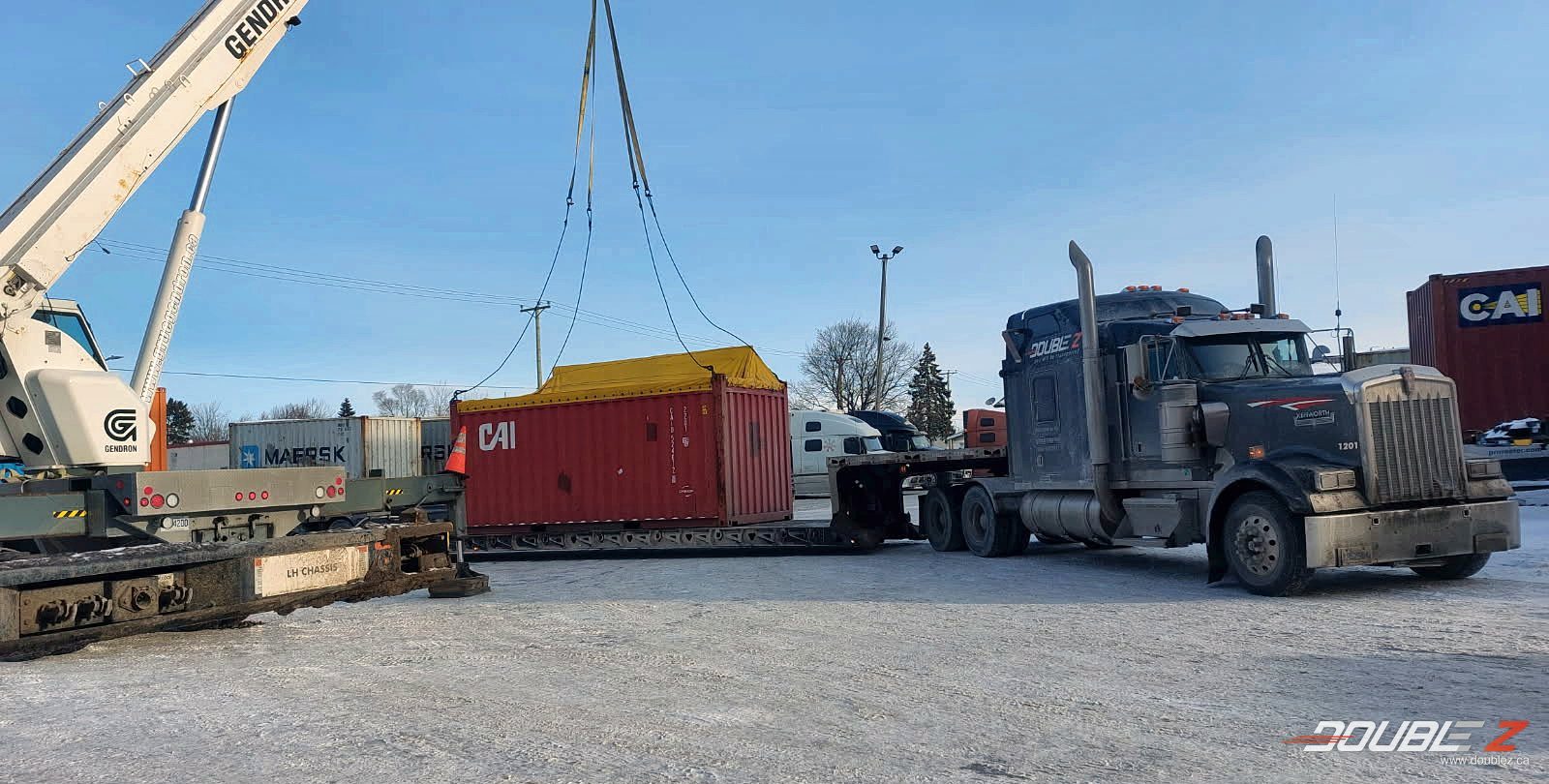
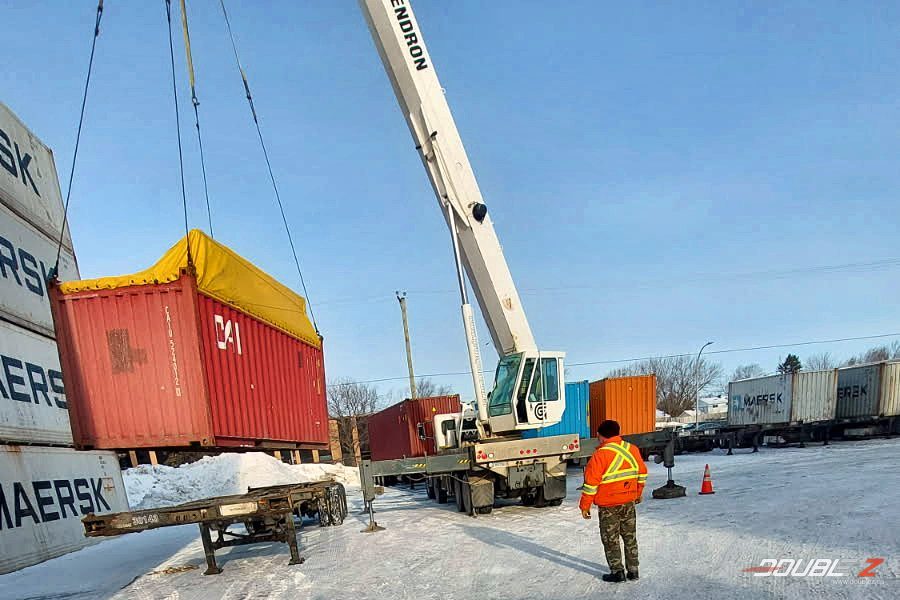
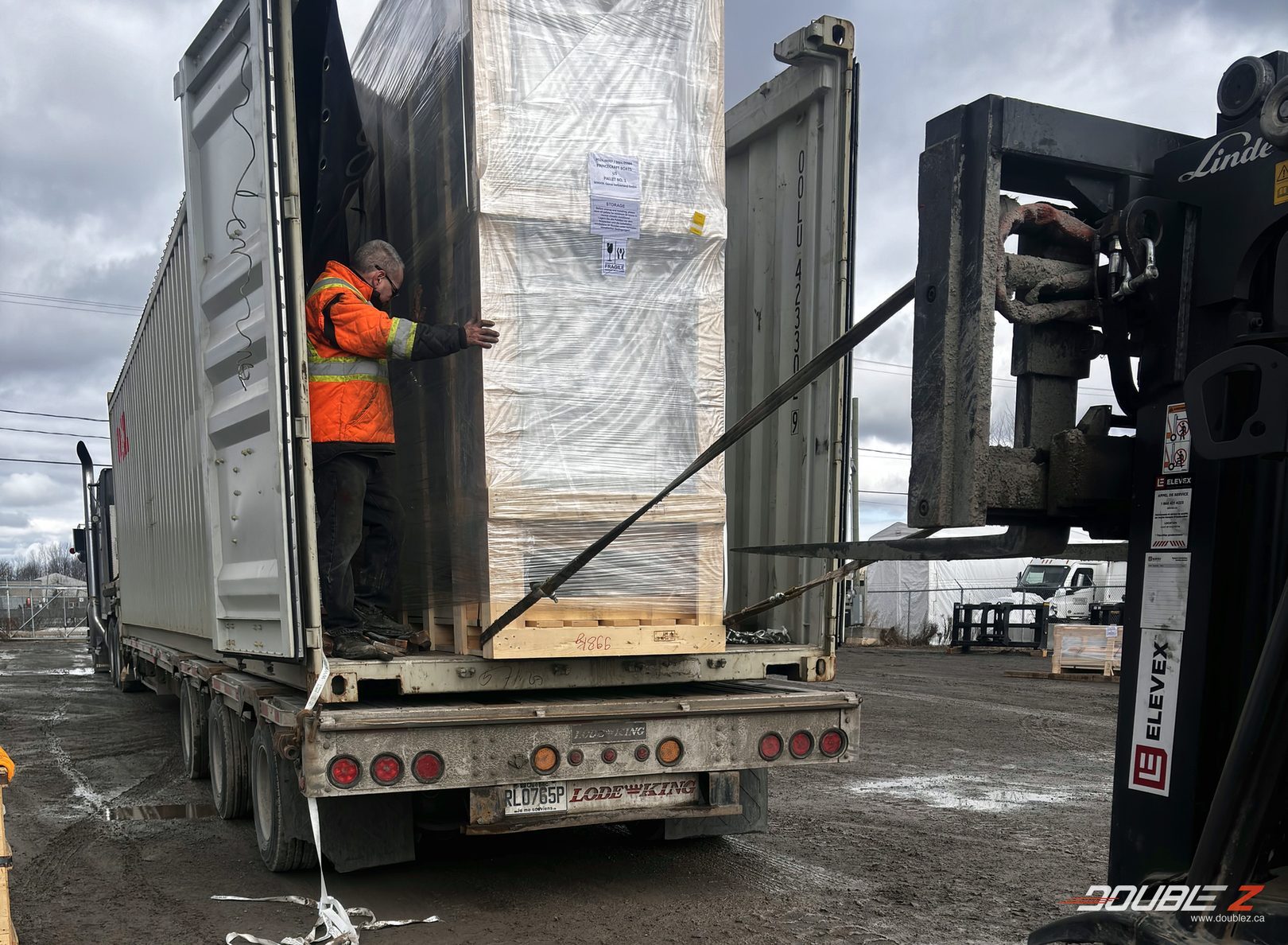
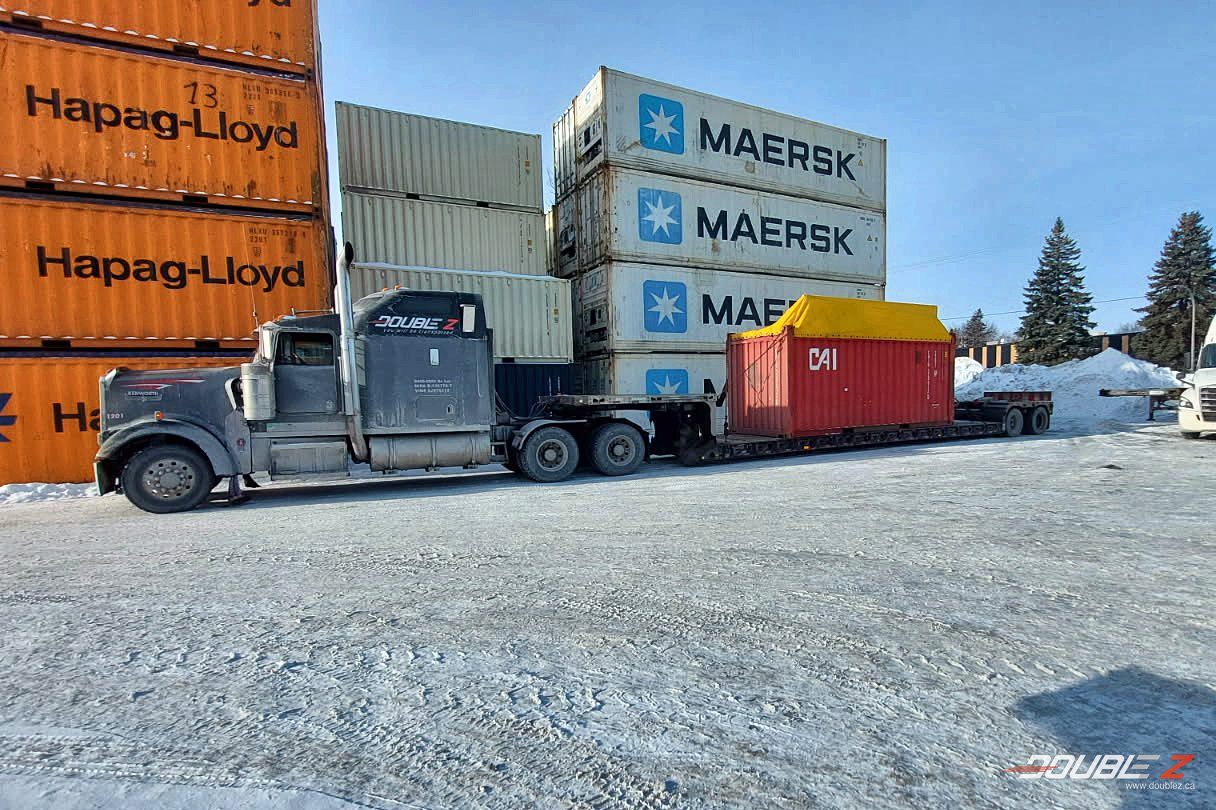
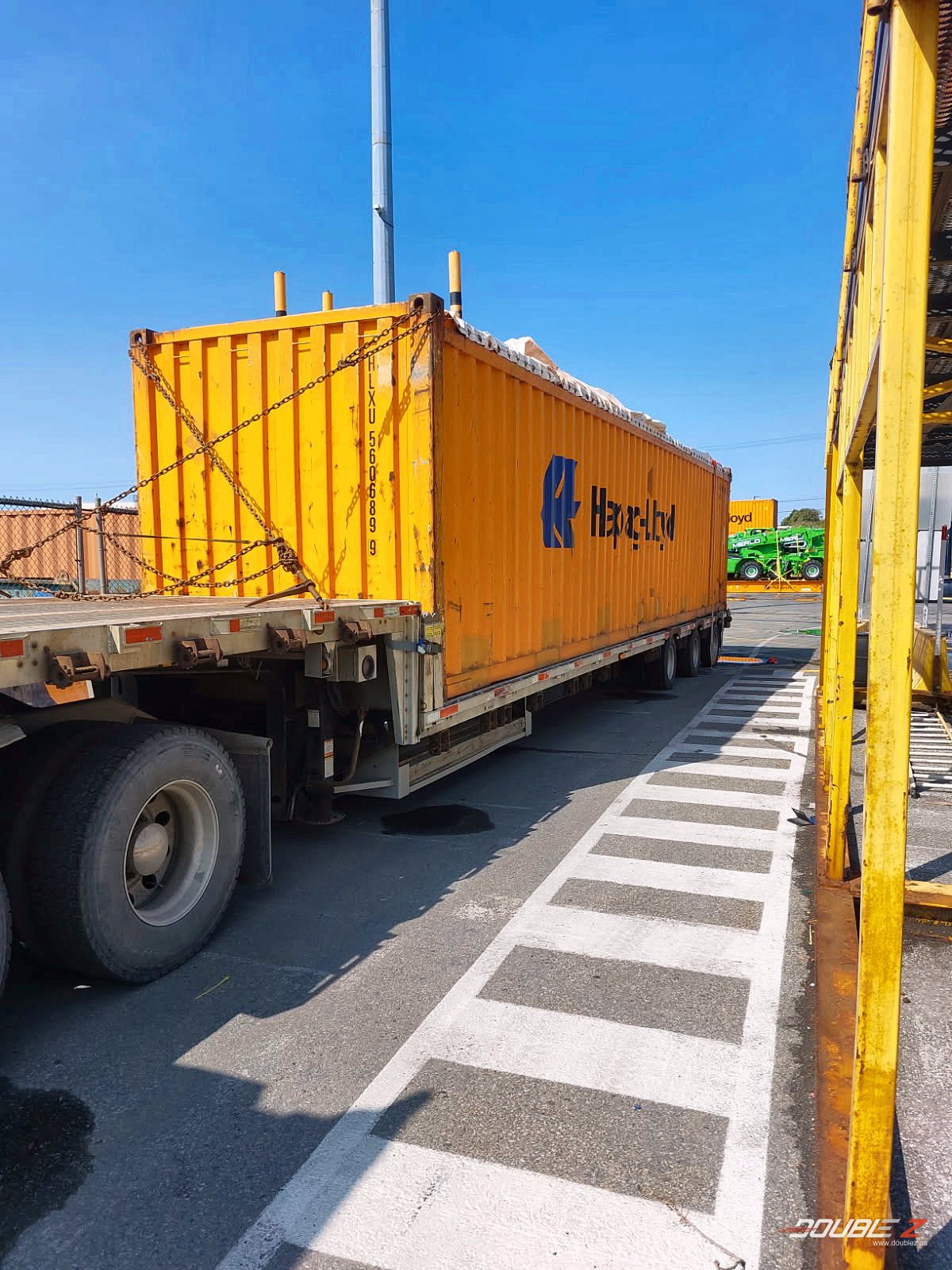
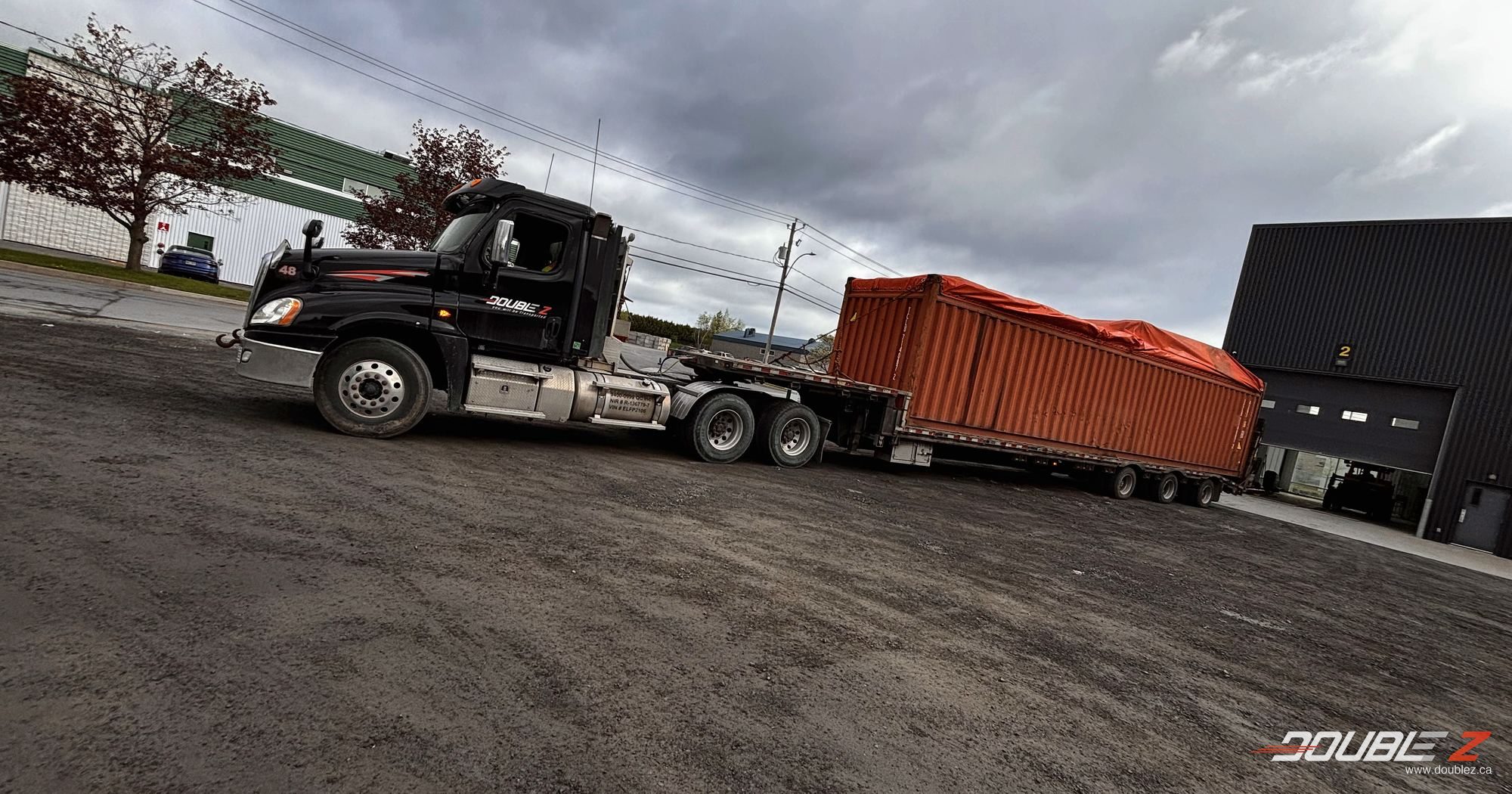
Typical flat rack & open-top cargo we move
- Mining and aggregate equipment — crushers, screens, conveyors
- Electrical equipment — transformers, switchgear, generators
- Construction machinery and attachments
- Structural steel, long pipe and fabricated components
- Aerospace and airport ground equipment
Most of these moves also involve destuffing and drayage at MGT and specialized oversize transport to the final site.
Frequently asked questions
Can you pick up a loaded flat rack from the Port of Montreal?
Yes. Depending on dimensions and destination, we either transload the cargo onto a suitable trailer or move the flat rack itself on suitable equipment.
Who arranges the crane?
We do. Crane or lift coordination is part of the job: we plan it around the terminal appointment and the cargo’s lifting points.
What information do you need to quote?
Container type (20’ or 40’ flat rack / open top), cargo dimensions and weight, photos or drawings if available, terminal, delivery address and target date.
Special containers
Flat racks and open tops
Official shipping line figures: floor height, length and payload. Open a card for every detail.
Flat rack
20 ft flat rack
- Floor height
- 14.5 in37 cm
- Inside length
- 18 ft 5 in561 cm
- Max payload
- 92,814 lb42,100 kg
Full specs
- Floor (deck) height: ground to top of floor
- 37 cm · 14.5 in · 1 ft 3 in
- Inside length, between corner posts
- 561–564 cm · 220.9–222.0 in
- Overall length
- 606 cm · 238.5 in · 19 ft 11 in
- Height
- Regular 8 ft 6 in only. Hapag-Lloyd has no 20 ft high cube flat rack.
- Inside width, between corner posts
- 221–223 cm · 86.9–87.7 in
- Width over the floor
- 221–224 cm · 87.0–88.0 in
- Height from floor to top of end walls
- 219–223 cm · 86.4–87.9 in
- Tare (empty weight)
- 2,740–2,940 kg · 6,041–6,482 lb
- Max payload
- 31,260–42,100 kg · 68,916–92,814 lb
- Max gross weight
- 34,000–45,000 kg · 74,957–99,207 lb
- Lashing points
- up to 5,000 kg (11,023 lb) each
- Good to know
- Collapsible end walls. Full payload only if the weight is spread over the whole floor. No stanchions unless asked at booking.
Flat rack
40 ft flat rack
- Floor height
- 24.8 / 25.5 inregular / high cube
- Inside length
- 38 ft 3 in1,165 cm
- Max payload
- 119,489 lb54,200 kg
Full specs
- Two heights
- Regular 8 ft 6 in (ISO 42P) and high cube 9 ft 6 in (ISO 45P). Ask the line which one is on your booking.
- Floor (deck) height, regular
- 63 cm · 24.8 in · 2 ft 1 in
- Floor (deck) height, high cube
- 65 cm · 25.5 in · 2 ft 2 in
- Floor to top of end walls, regular
- 196 cm · 77.1 in · 6 ft 5 in
- Floor to top of end walls, high cube
- 225–226 cm · 88.5–89.1 in
- Overall length
- 1,219 cm · 480.0 in · 40 ft 0 in
- Inside length between posts, high cube
- 1,165 cm · 458.7 in · 38 ft 3 in
- Inside width between posts, high cube
- 215–223 cm · 84.6–87.6 in
- Tare, high cube
- 5,800–5,950 kg · 12,787–13,117 lb
- Max payload, high cube
- 44,050–54,200 kg · 97,113–119,489 lb
- Max gross weight, high cube
- 50,000–60,000 kg · 110,230–132,276 lb
- Lashing points
- up to 5,000 kg (11,023 lb) each
- Good to know
- Collapsible end walls, gooseneck tunnel at both ends. Heavy cargo must rest on the main girder; payload depends on the resting length.
Open top
20 ft open top
- Floor height
- 6.6 in17 cm
- Inside length
- 19 ft 4 in590 cm
- Max payload
- 66,248 lb30,050 kg
Full specs
- Floor height: ground to inside floor
- 17 cm · 6.6 in · 7 in
- Inside length
- 590 cm · 232.0 in · 19 ft 4 in
- Inside width
- 235 cm · 92.5 in · 7 ft 9 in
- Inside height: middle / side
- 238 / 234 cm · 93.7 / 92.1 in
- Door opening (width × height)
- 234 × 228 cm · 92.0 × 89.8 in
- Roof opening (length × width)
- 534 × 223 cm · 210.2 × 87.8 in
- Tare (empty weight)
- 2,450 kg · 5,402 lb
- Max payload
- 30,050 kg · 66,248 lb
- Max gross weight
- 32,500 kg · 71,650 lb
- Volume
- 32.5 m³ · 1,148 ft³
- Good to know
- Removable tarp and roof bows. Door header swings out. Lashing points 1,000 kg (2,205 lb) each.
Open top
40 ft open top
- Floor height
- 6.6 in17 cm
- Inside length
- 39 ft 6 in1,203 cm
- Max payload
- 62,721 lb28,450 kg
Full specs
- Floor height: ground to inside floor
- 17 cm · 6.6 in · 7 in
- Inside length
- 1,203 cm · 473.6 in · 39 ft 6 in
- Inside width
- 235 cm · 92.5 in · 7 ft 9 in
- Inside height: middle / side
- 238 / 235 cm · 93.6 / 92.4 in
- Door opening (width × height)
- 234 × 229 cm · 92.0 × 90.2 in
- Roof opening (length × width)
- 1,157 × 221 cm · 455.6 × 87.0 in
- Tare (empty weight)
- 3,850–4,050 kg · 8,488–8,929 lb
- Max payload
- 26,630–28,450 kg · 58,708–62,721 lb
- Max gross weight
- 30,480–32,500 kg · 67,196–71,650 lb
- Volume
- 66.4 m³ · 2,345 ft³
- Good to know
- Removable tarp and roof bows. A 40 ft high cube open top gives 30 cm (12 in) more height inside.
Source: Hapag-Lloyd official Container Specification; regular 40 ft flat rack heights from Triton International. Other lines use similar containers, but every series differs. Images: Double Z illustrations and photos of Double Z moves. For guidance only: always check with the shipping line or the CSC plate on the container before a move. Double Z is not responsible for errors or for decisions based on these figures. PDF
Related reading
From the field
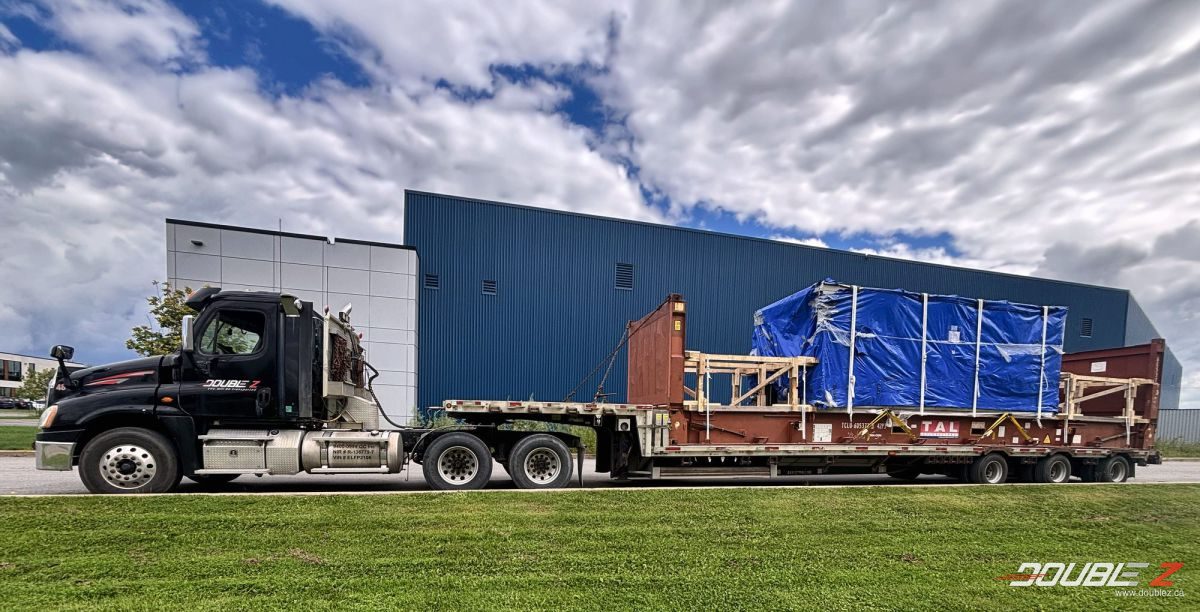
Flat rack refused in Montreal: repacking before the vessel cutoff
A flat rack loaded in-house was refused for ocean carriage. How Double Z repacked it, rebuilt the bracing and returned it before cutoff, plus acceptan…
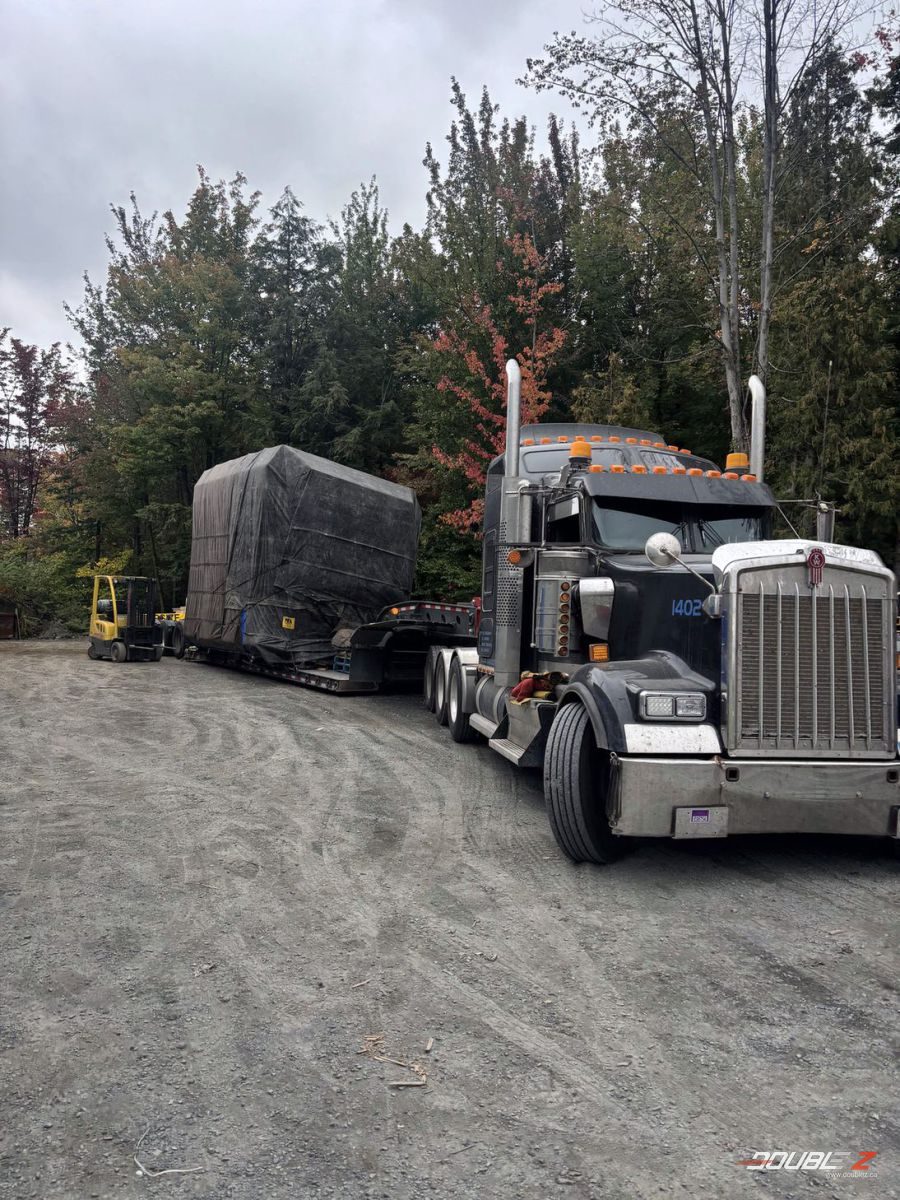
Moving a 69,000 lb transformer from Granby to Montreal, then storing it
A 69,000 lb transformer, 170 in high and 12 ft wide: a special oversize and overweight load. How we moved it with an escort, stored it until the site…
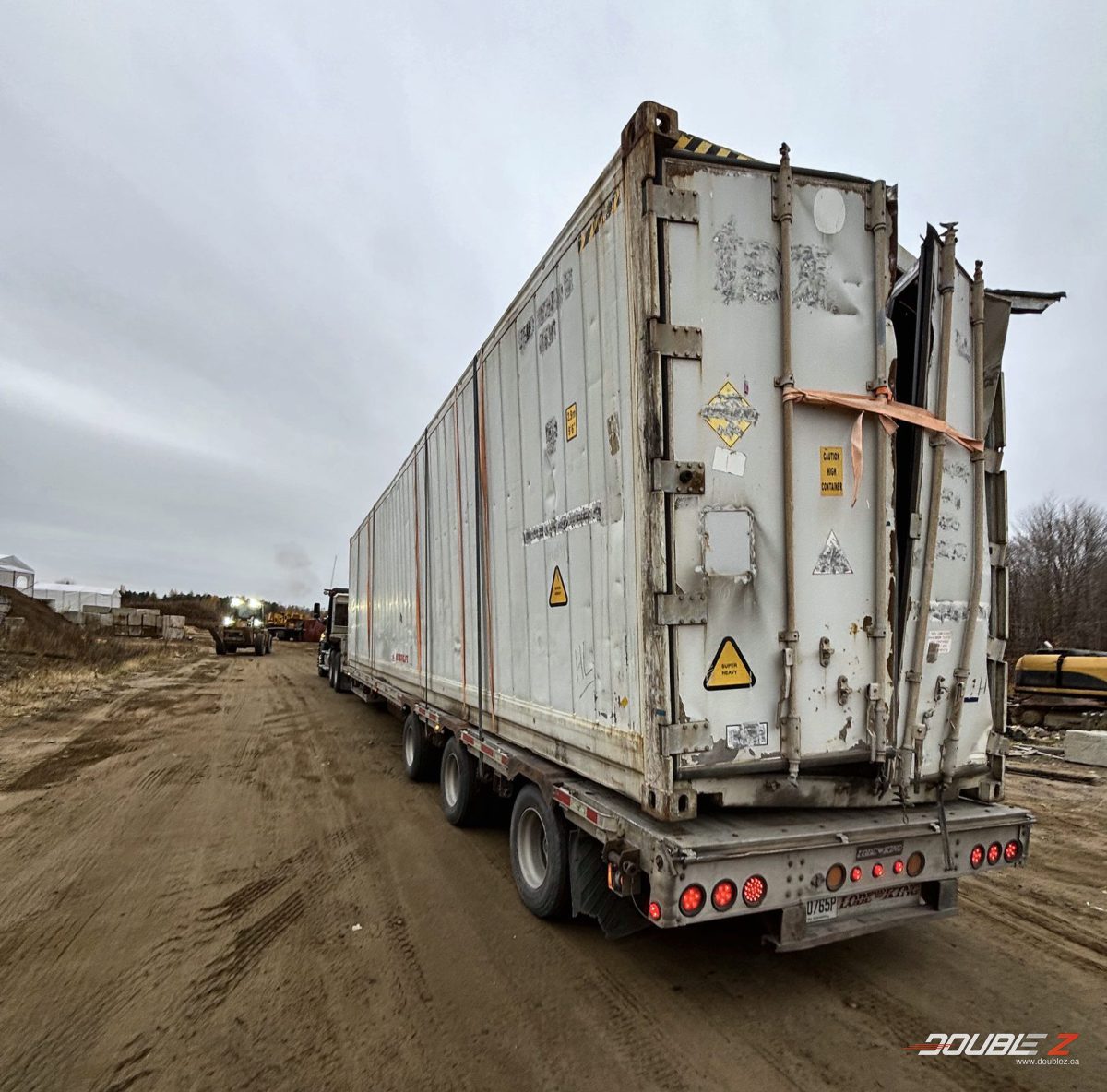
Damaged container in Montreal: when a chassis pickup cannot proceed
A damaged container needs assessment before another pickup attempt. What to document, how Double Z plans recovery and when cargo transfer may be neede…
Frequently asked questions
More flat rack and open top questions
What is the difference between a flat rack and an open top container?
An open top has walls and a floor but no roof, so tall cargo is lowered in by crane. A flat rack has only a floor and two end walls, so cargo can stick out on the sides and top. Both carry freight that does not fit in a standard container.
What is out-of-gauge (OOG) cargo?
Out-of-gauge cargo is bigger than the inside of a standard container in length, width or height. It usually travels on a flat rack or open top and often becomes an oversize load on the road.
Can a loaded flat rack go on the road as it is?
Up to 102 in (8 ft 6 in) wide, no width permit is needed. From 103 in, it needs a permit. For the height, it depends on the trailer: we choose the right equipment, or we lift the cargo off and reload it on a lower trailer. We check this before the vessel arrives.
Is cargo on a flat rack protected from rain?
No. A flat rack or open top does not keep water out, so the cargo is usually crated, wrapped or tarped. For the road we can use a Roll-Tite or tarps.
Can you load a flat rack for export?
Yes. We load and secure the cargo and deliver the flat rack to the terminal before the cutoff. Any wood used for blocking must be heat-treated and stamped to the ISPM 15 standard, or the load can be refused.
Who supplies the empty flat rack or open top?
The shipping line. We pick up the empty at the terminal or depot named in your booking and bring it to your site for loading.
Port logistics and specialized transport
Oversize, flat rack, open top and specialized freight out of the port. Emergency and turnkey service.