
In this article
A damaged container that will not lock onto a chassis needs a different transport plan. A bent frame or broken corner can stop a routine port pickup before the truck leaves the terminal. Double Z handles this work in Montreal, but the first decision is whether the container can be handled safely at all.
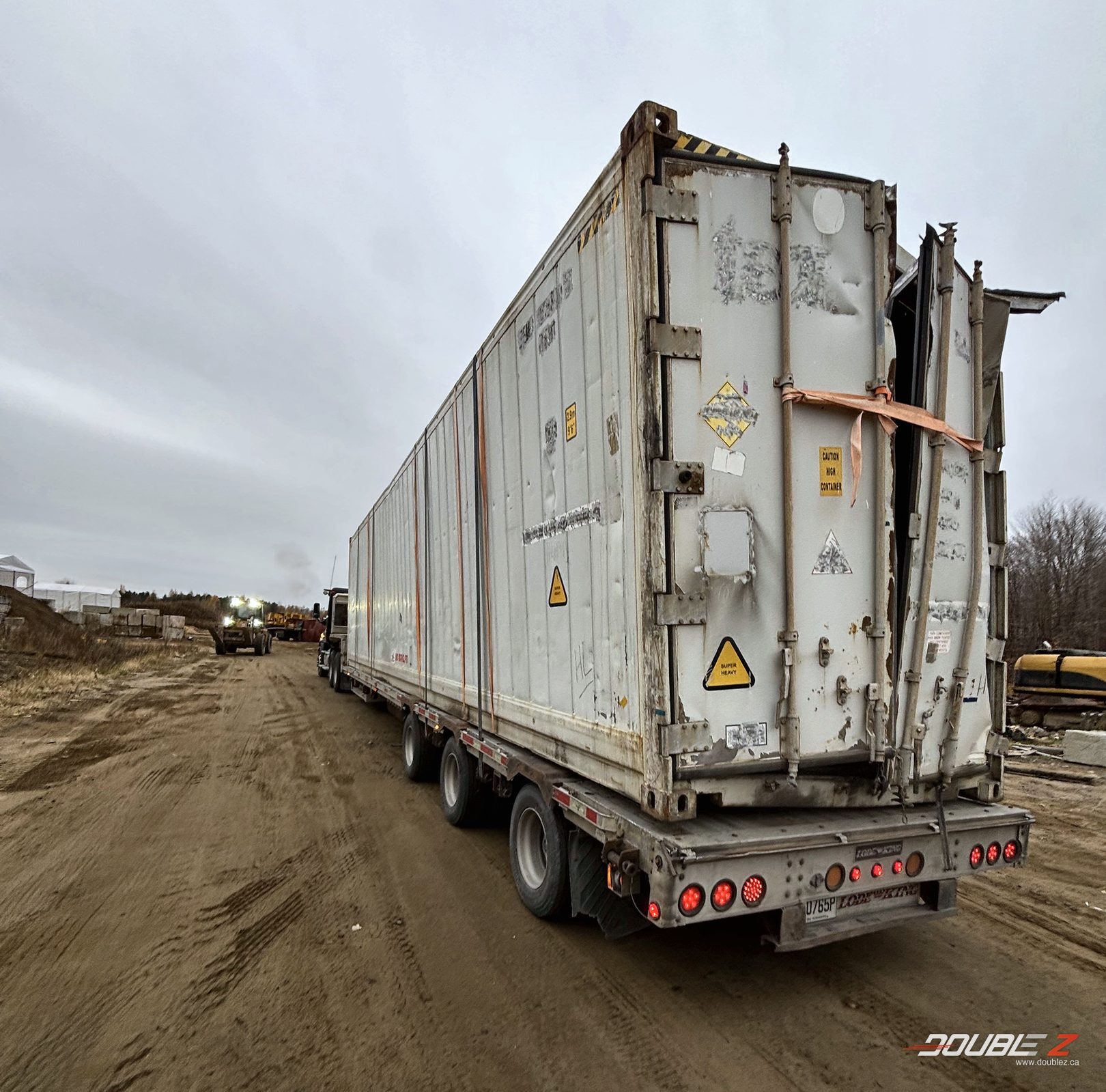
What changes when the corners no longer line up
A standard container chassis supports and secures the box at its four lower corner fittings. If a fitting is broken or distorted, or the frame has twisted, the locking equipment may not engage. Crushed doors, displaced corner posts and bent lower rails also call for inspection. A container that looks only dented from one side can have damage elsewhere; photographs help with planning but do not establish structural fitness.
The UNECE CTU Code guidance on suitability identifies serious defects in structural components as a danger that makes a unit unsuitable for transport. Treat a failed chassis fit as a reason to stop and get the right assessment, not as an invitation to force the locks.
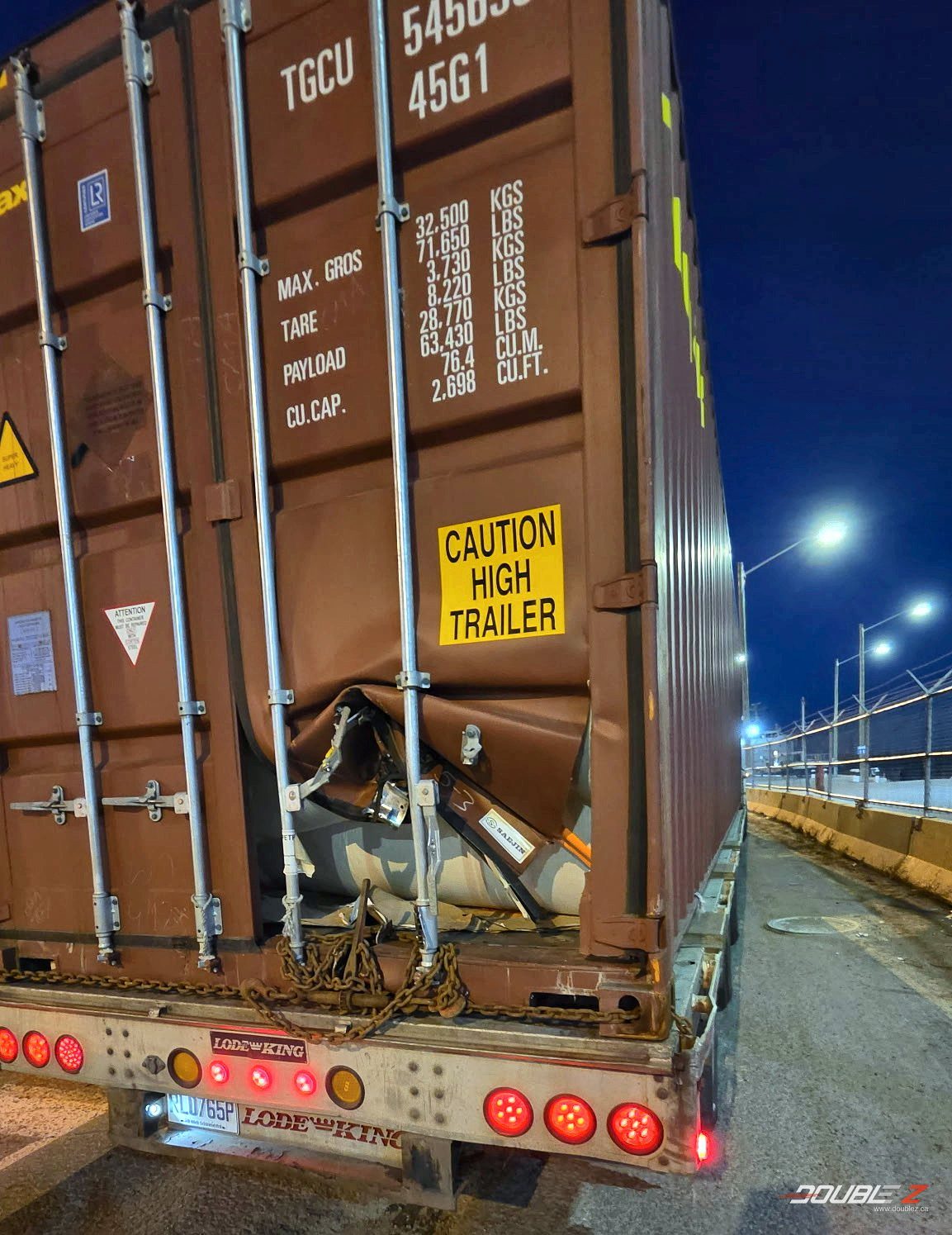
The photos show specialized moves, not a rigging recipe
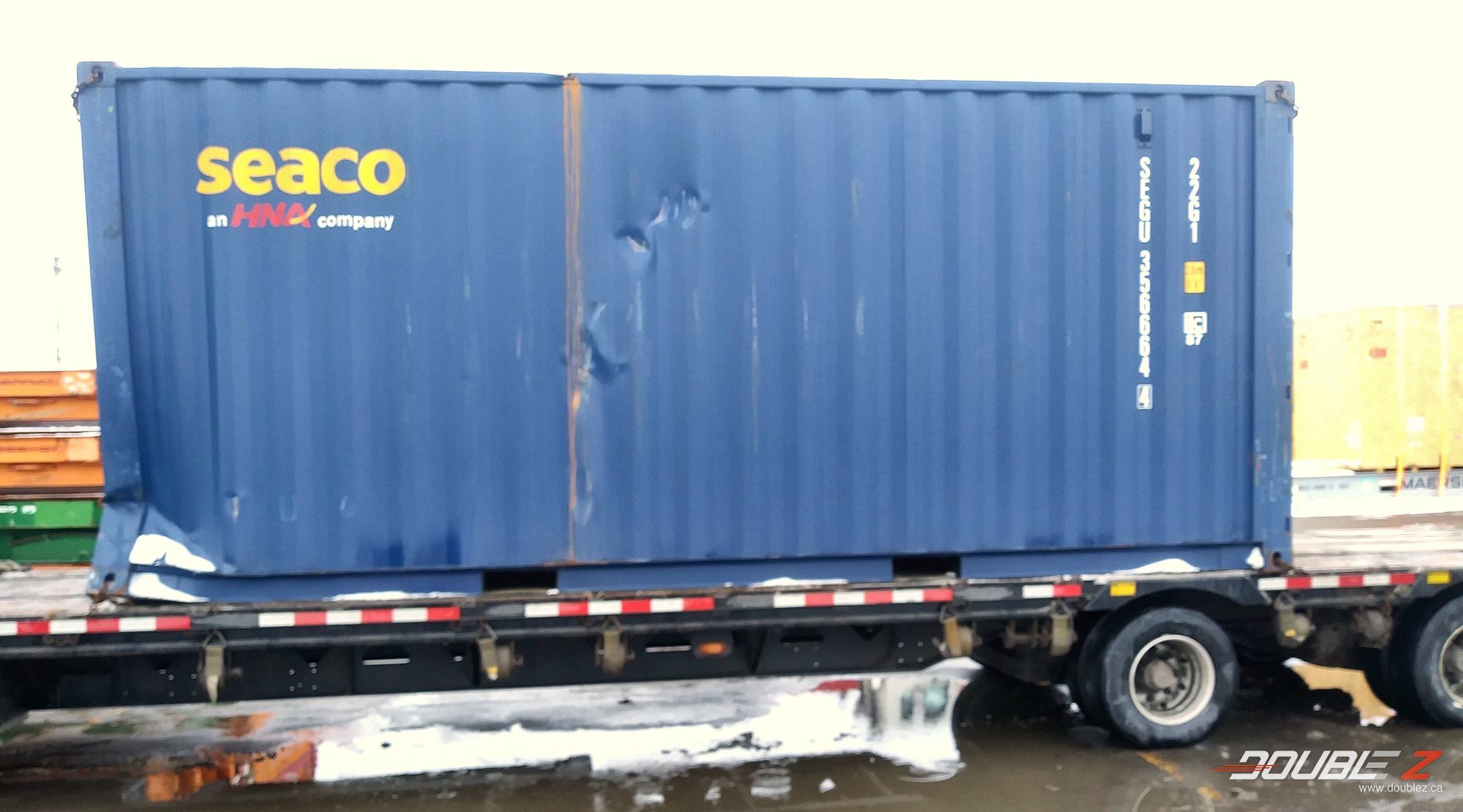
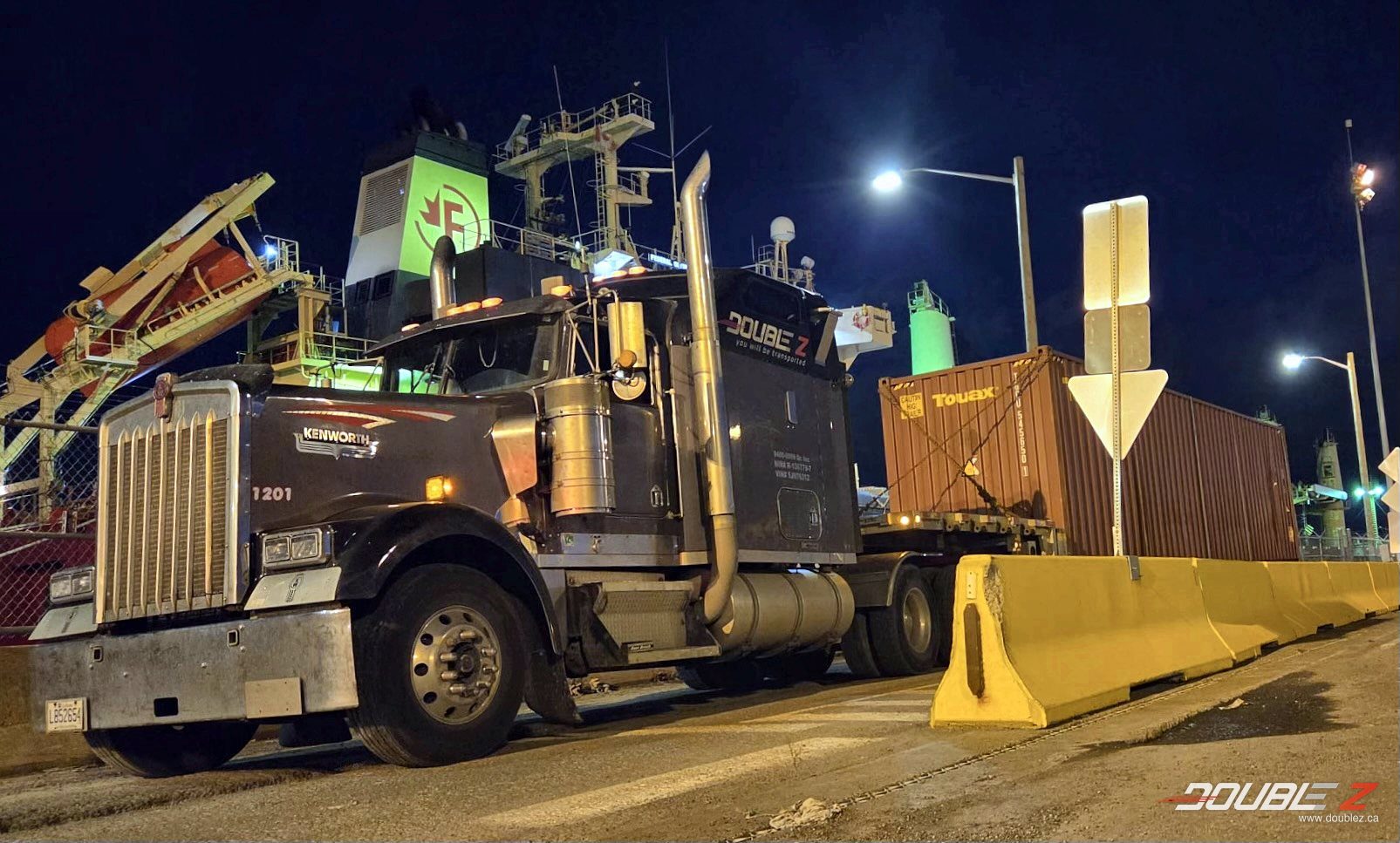
The Double Z job photos here show damaged containers carried on deck trailers, including a distorted refrigerated container and a blue container with a damaged lower corner. Other views show a crushed door area, a twisted rear frame and work in a port yard or beside a ship at night. They illustrate the kind of recovery work involved; they do not prove that every damaged box can be moved the same way.
A visible strap does not tell you the condition of the supporting structure or the full handling plan. Do not copy attachment points, lifting arrangements or restraint methods from a photograph. The competent people responsible for the container, the terminal handling and the road movement need to agree on what is safe for that specific unit.
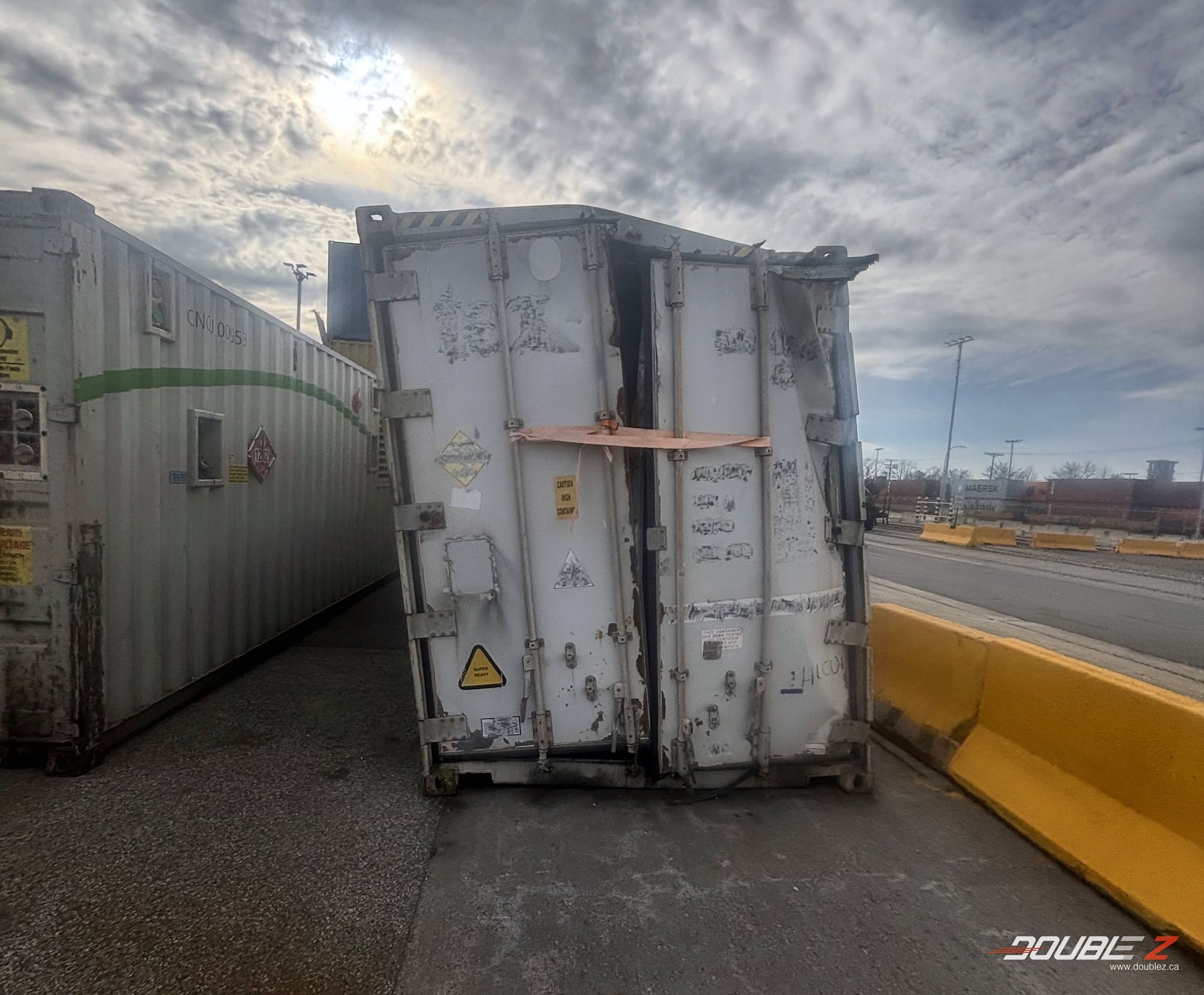
Why forcing a normal pickup is the wrong response
TT Club’s report on damaged corner castings describes a container falling from a front-loading lift truck after damage from an earlier incident. That was not a Double Z job. It shows why an apparently routine lift can fail when a structural connection is already compromised.
The IMO overview of the Convention for Safe Containers (CSC) places ongoing maintenance and examination responsibilities on the owner. An approval plate does not settle the condition of a container after an impact. The IMO/ILO/UNECE CTU Code is non-mandatory international guidance for sea and land handling and packing; applicable laws and terminal instructions still govern the operation.
What to do before arranging another truck
- Stop the normal pickup attempt and keep people clear of the damaged unit. Follow the terminal’s safety instructions.
- From a safe position, photograph the visible damage, all accessible sides, corner fittings, doors, seal and container number. Do not climb on it or enter an unstable container to improve the photos.
- Keep interchange records and shipping documents. Record the damage and the time it was observed; note exceptions on the relevant paperwork.
- Notify the shipping line or container owner, your freight forwarder and your insurer. Preserve the seal and seek instructions before opening or altering anything.
- Send the recovery carrier the location, container number and size, loaded or empty status, cargo description, available weight information and intended destination. Flag dangerous goods or temperature-control needs.
How we plan the move
We start with the information available and establish what further inspection or specialist input is needed. The assessment covers the container’s condition, the cargo, access at pickup and the destination’s receiving arrangements. A repair depot, customer site and storage yard may need different handling equipment. The receiving location must be ready before a departure is scheduled.
A deck trailer, step deck or double drop may be an option after assessment. None is an automatic substitute for sound container structure. Lifting, support and securement arrangements must suit the actual damage and the equipment available. Where a safe intact move cannot be established, the plan may require a controlled cargo transfer first. We coordinate the transport with the terminal or lifting provider rather than asking a driver to improvise.
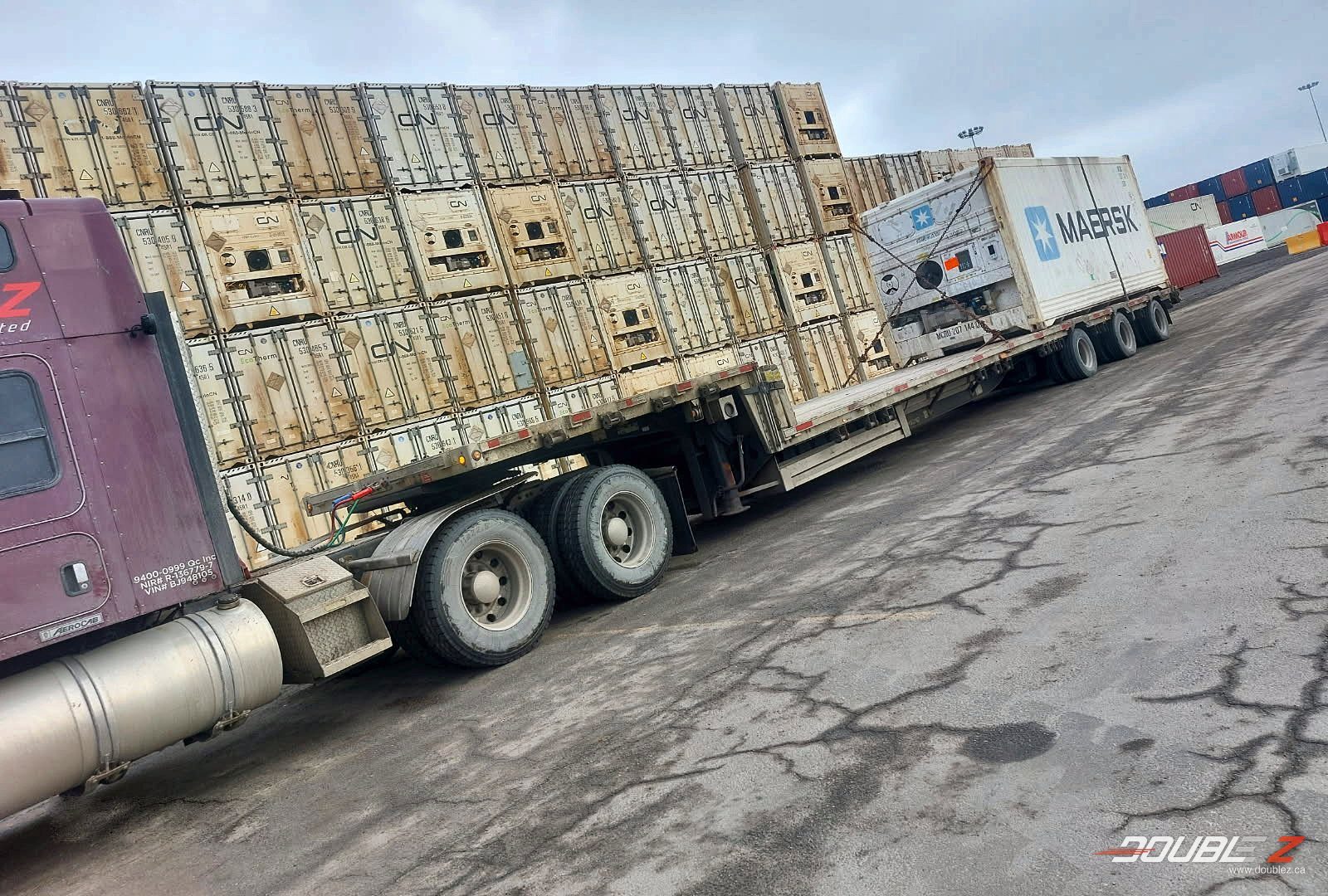
Road planning also needs the measured loaded vehicle dimensions, weight distribution, route and jurisdictions involved. Our specialized and oversize transport service considers those details. Quebec’s special-permit and escort information is a useful reference: permit and escort decisions cannot be reduced to one width, height or overall-length shortcut.
When the cargo needs to come out
If the container cannot safely continue intact, container destuffing and port drayage may form part of the recovery. Unloading is itself a planned operation, especially where doors or cargo have shifted. We can arrange reloading onto a flatbed or another suitable container and storage and cross-docking while the next movement is organized.
Our article on container destuffing and flatbed reloading explains that handoff. Weather-sensitive cargo may need Roll-Tite transport; other shipments may call for flat rack or open top container handling. The cargo and receiving site determine the choice.
Montreal coordination and the information we need
Double Z works at MGT, Racine, Termont, the CN and CP rail terminals and customer sites. Access, appointments and handling permissions must be confirmed for each job. Our Montreal port logistics article explains why those handoffs matter.
For an assessment, send photos, the damage location, container identification, cargo details and approximate weight, pickup point and destination. Say which weights or dimensions still need confirmation. Request a quote or call 514-375-4506. We can then identify the missing information before committing equipment.
Questions customers ask
Can a damaged container still be moved? Sometimes, following assessment and an agreed recovery plan. A move for repair is not clearance for normal service. Cargo transfer may be necessary.
Who pays for the damage? Liability depends on the facts, contracts and insurance. Double Z plans the transport; we do not determine the claim. Preserve records and involve the responsible parties early.
Can you promise an immediate pickup? Timing depends on safe handling, terminal release, equipment and receiving access. We establish those conditions before confirming a move.
Fast quote
A damaged container that will not go on a chassis? Send us photos and the terminal, and we will plan the move.