
In this article
A customer loaded a flat rack in-house, then had it refused at the Port of Montreal because the cargo was not secure for ocean transport. Storage charges were running and the vessel cutoff was approaching. Double Z collected the load, repacked it and returned it just before cutoff. The shipment caught its vessel.
What needed correcting
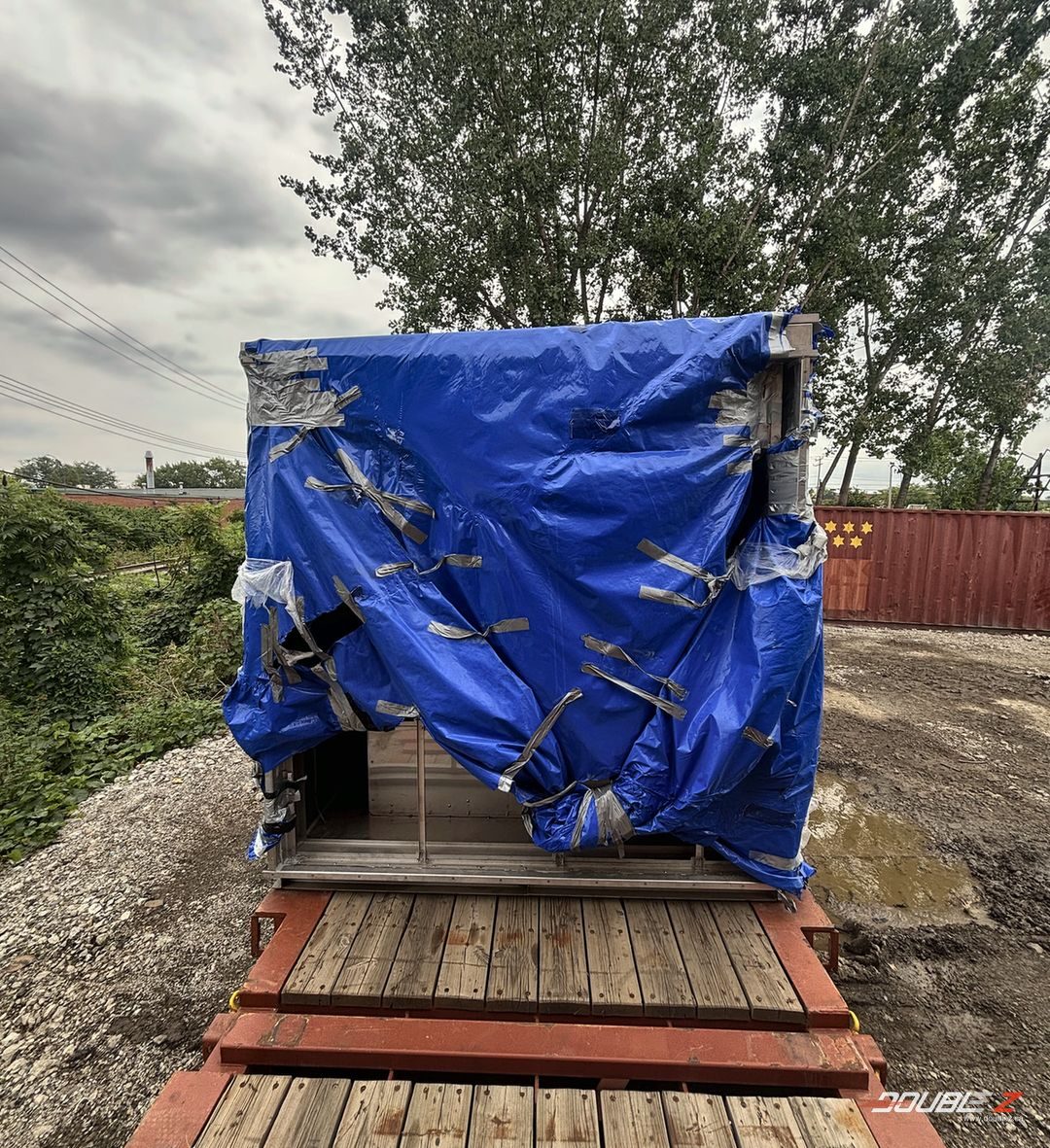
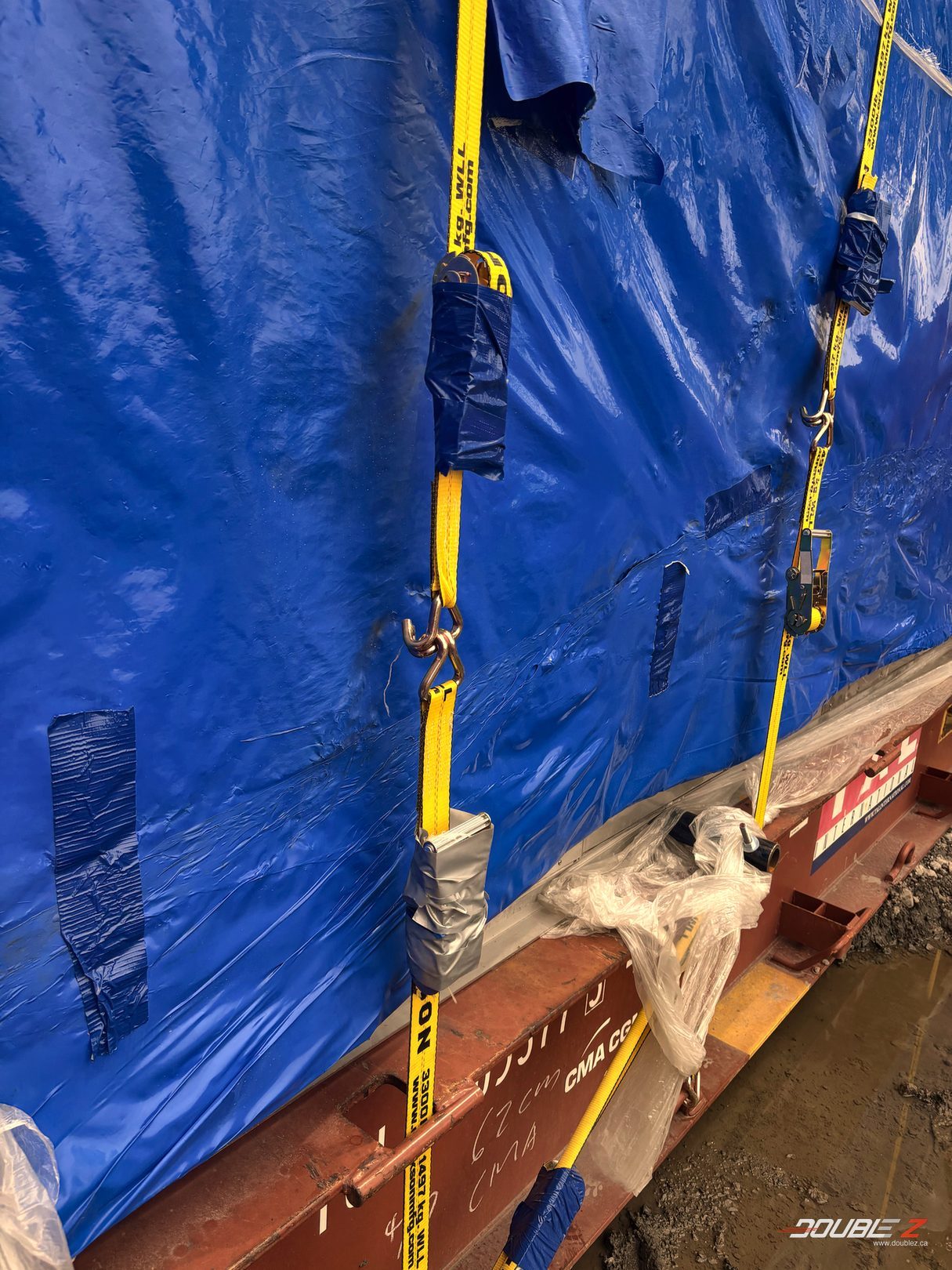
The pickup inspection found inadequate bracing between the cargo and the flat rack’s end walls, a loose tarp patched with tape, and unsecured wood on top. These were the problems reported on this job. Soil contamination was not the reason for this refusal.
Road transport and ocean carriage both need suitable securement. A load that looks tidy, or has already travelled by truck, is not automatically ready for sea. The IMO/ILO/UNECE CTU Code provides non-mandatory international guidance across the land and sea transport chain. It does not replace applicable regulations or the booked carrier’s acceptance requirements.
Check the shipping line’s acceptance requirements
Hapag-Lloyd’s November 2015 flat rack guide reserves inspection and refusal rights where stowage or securing is unsafe. It addresses weight transfer to the main rails, compatible lashing materials, sharp-edge protection, knots in web lashings and accurate out-of-gauge dimensions including lashing equipment. Bracing is cargo-dependent; suitable direct lashings can sometimes replace it. This is planning guidance, not a design for an unknown load.
Swire Shipping’s September 2023 acceptance advisory requires a lashing certificate from a competent cargo surveyor before loading for all its flat rack shipments. It also states that insufficiently lashed out-of-gauge units will be rejected. That is Swire’s requirement, not evidence that every line requires the same certificate. Neither advisory identifies the carrier for this Double Z job.
Use wood that meets the destination’s rules
We rebuilt this load’s bracing with stamped wood. The CFIA exporter notice explains the Canadian heat-treatment route for regulated wood packaging going to participating destinations: debarked wood, at least 56°C for 30 continuous minutes throughout the wood, including its core, and marking through a registered facility. An HT mark includes the IPPC symbol, country and facility identifiers and treatment code.
Scope matters. ISPM 15 covers raw-wood packaging and dunnage, but excludes processed materials such as plywood. CFIA directive D-13-01 also identifies exemptions, including thin wood of 6 mm or less. Continental-US exemptions are conditional, not permission to use any lumber. Confirm destination and transit requirements with your forwarder and supplier. Heat treatment is not the only treatment recognized internationally, and a phytosanitary mark does not establish bracing strength.
CFIA warns that non-compliant wood packaging can lead to refusal, return, destruction or penalties. Correct materials and traceability belong in the preparation plan, before the unit goes to the terminal.
What the delay can cost
The customer incurred storage and other charges on this job. A refusal can involve terminal or rail storage, shipping-line demurrage while equipment remains in the terminal, detention while it is outside, and corrective trucking, labour, wood, lashings and weather protection. Contract wording and free-time clocks matter.
Published examples are not this customer’s bill. Termont’s import schedule lists five free calendar days, then CAD 185 per TEU per day on days 6–9 and CAD 225 from day 10; a 40-foot unit is two TEU. It lists a CAD 63 full-container truck gate fee and CAD 320 late-gate fee. These are import references, not an export flat rack quotation; the page gives no historical effective date.
Hapag-Lloyd’s Canadian export tariff effective January 1, 2026 includes flat racks as special equipment. It lists five calendar days after interchange free for detention, then USD 250 daily for three days and USD 350 thereafter. Demurrage has five working days after receiving free, then USD 200 daily for five calendar days and USD 350 thereafter; terminal or rail storage is separate.
At that detention rate, four chargeable days illustrate USD 1,100 (3 × 250 + 350), before other costs. The tariff’s no-free-time vessel-roll rule concerns cargo rolled at the customer’s request; do not apply it to every missed sailing. Confirm applicable charges in writing with your line and terminal. Montreal Gateway Terminals is a contact starting point for its terminals, including Racine.
Checklist after a refusal
- Obtain the refusal reason in writing and identify who must approve the correction.
- Confirm the booking, cargo cutoff, receiving window and separate free-time deadlines.
- Send photos of all sides, lashings, supports, wood marks and container identification, plus cargo dimensions and weight.
- Ask the line and forwarder whether a surveyor, lashing certificate or further inspection is required.
- Arrange an authorized recovery and correction plan before another terminal attempt. A refusal for ocean loading does not clear the unit for road transport.
A separate problem: soil on used machinery
Soil contamination was not part of this case. For Canadian imports, CFIA directive D-95-26 prohibits soil-contaminated articles, including machinery and containers. Non-compliance can mean refusal, removal or disposal, with action costs borne by the person in care or control. Other destinations have their own requirements.
Do not wrap over dirt. Ask what cleaning, inspection and certification apply to the machine and destination. UK plant-health guidance for used agricultural or forestry machinery illustrates the detail: exterior panels, undercarriage, wheel arches, hydraulic pipes, axles, filters and cab. Its GB-to-EU/Northern Ireland scope is not a blanket rule for Canadian exports. Use an appropriate cleaning location, document the condition and prevent recontamination before reloading. See our machinery transport article for the road-handling side.
The correction on this shipment
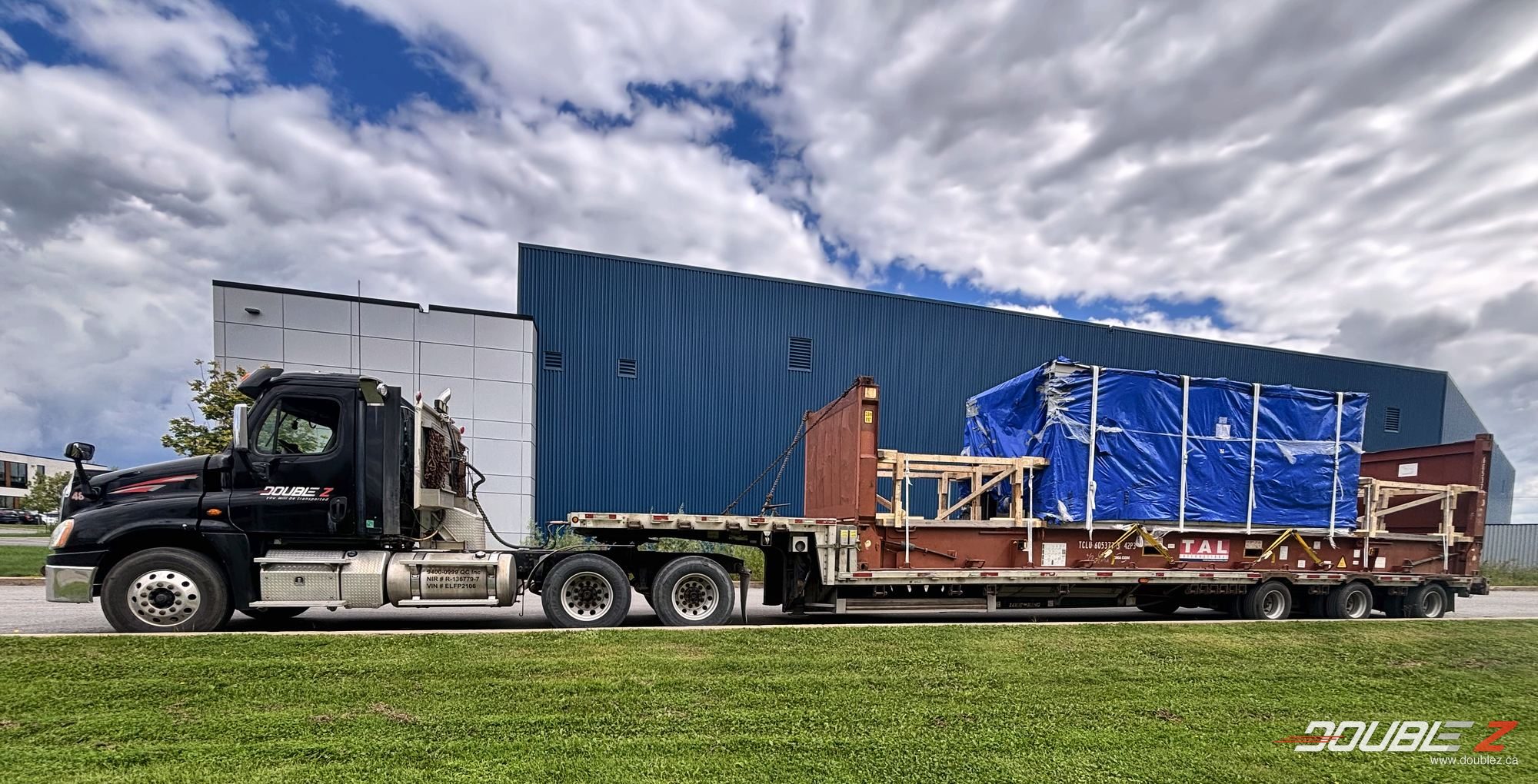
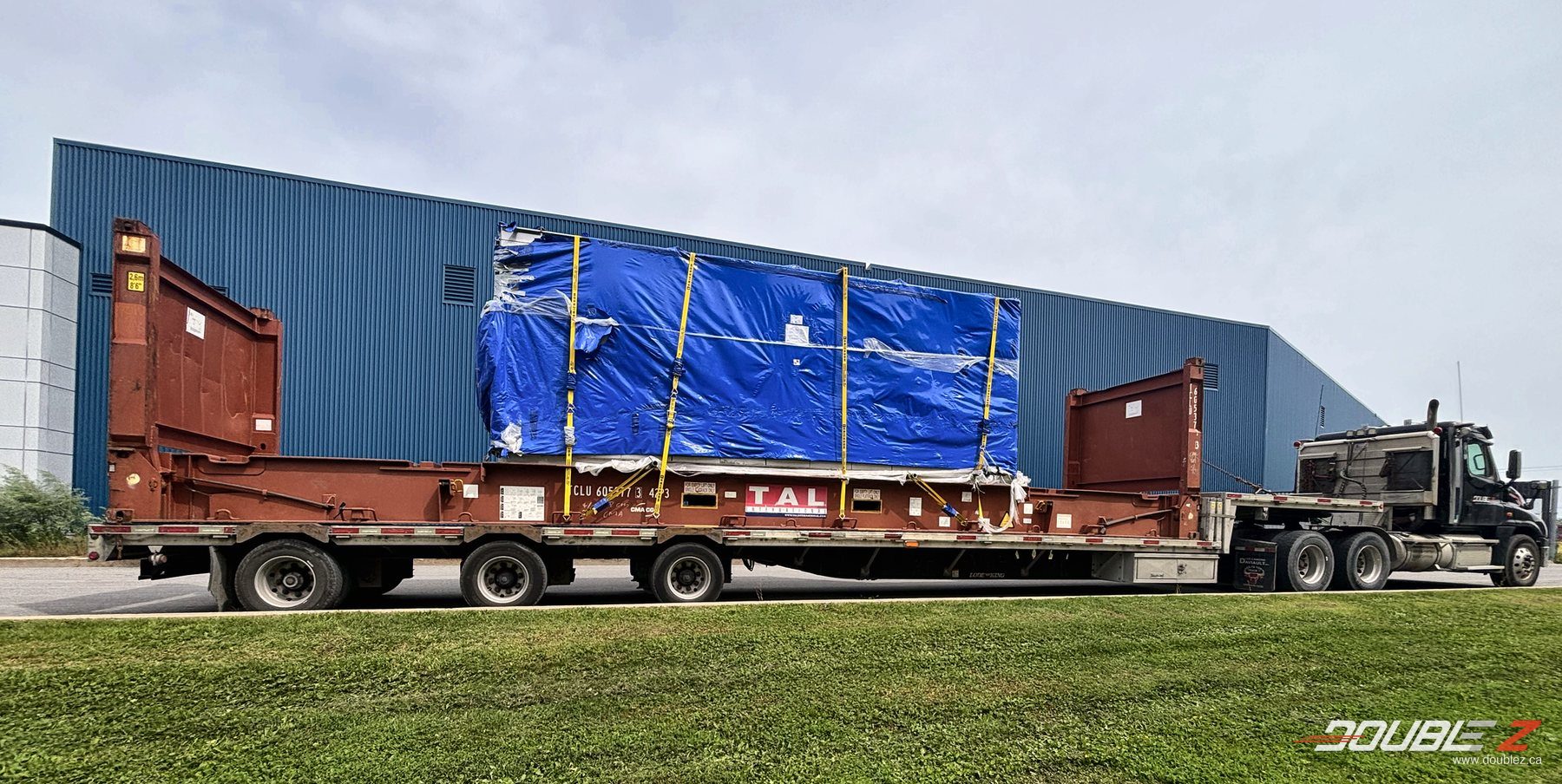
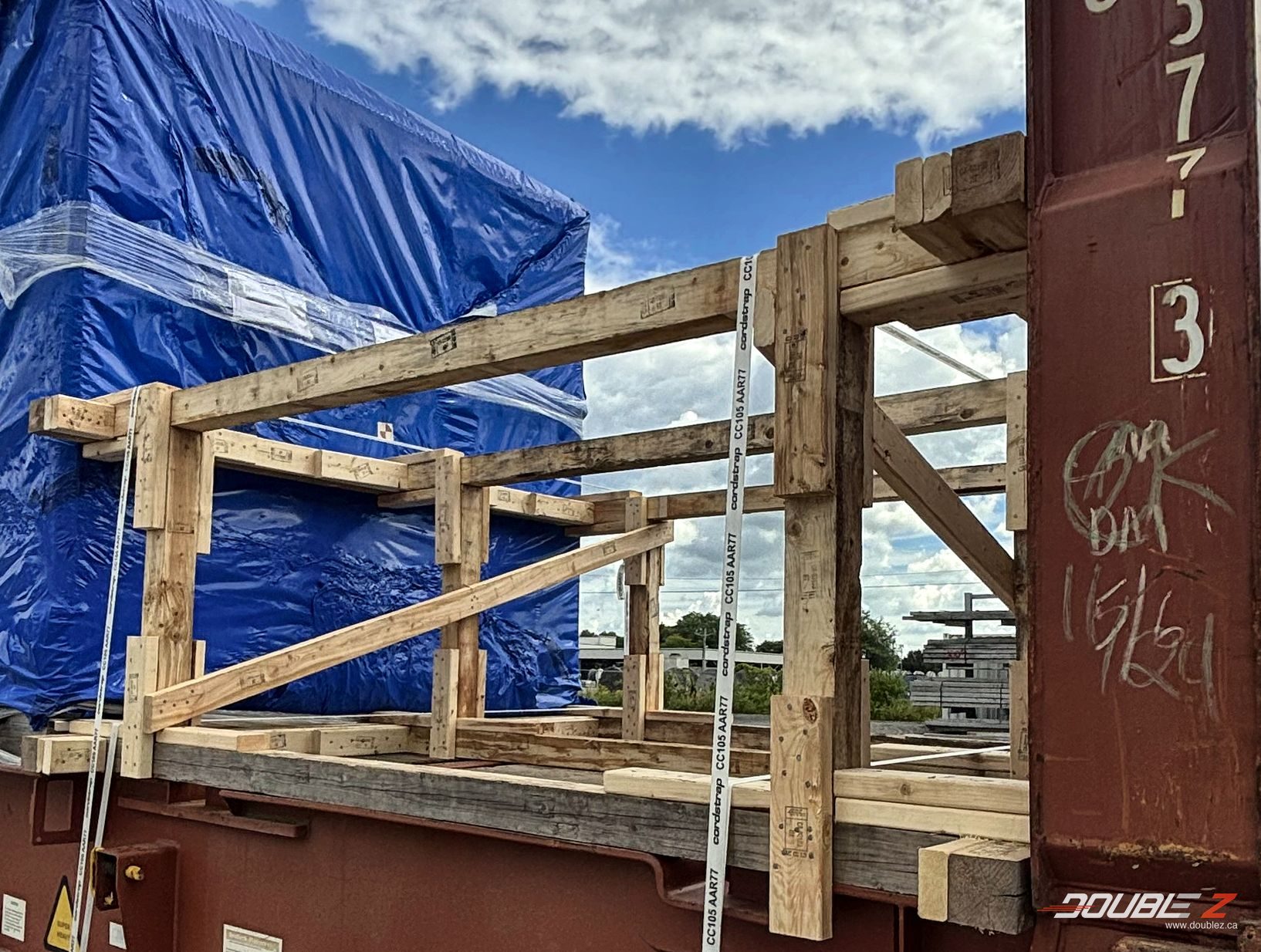
We picked up the flat rack, repacked the load and redid the tarp. We built stamped-wood bracing between the cargo and the end walls at both ends, then secured the repacked load with straps. We returned it just before cutoff and it caught the vessel. This describes that job, not a bracing specification or a promise about the next booking.
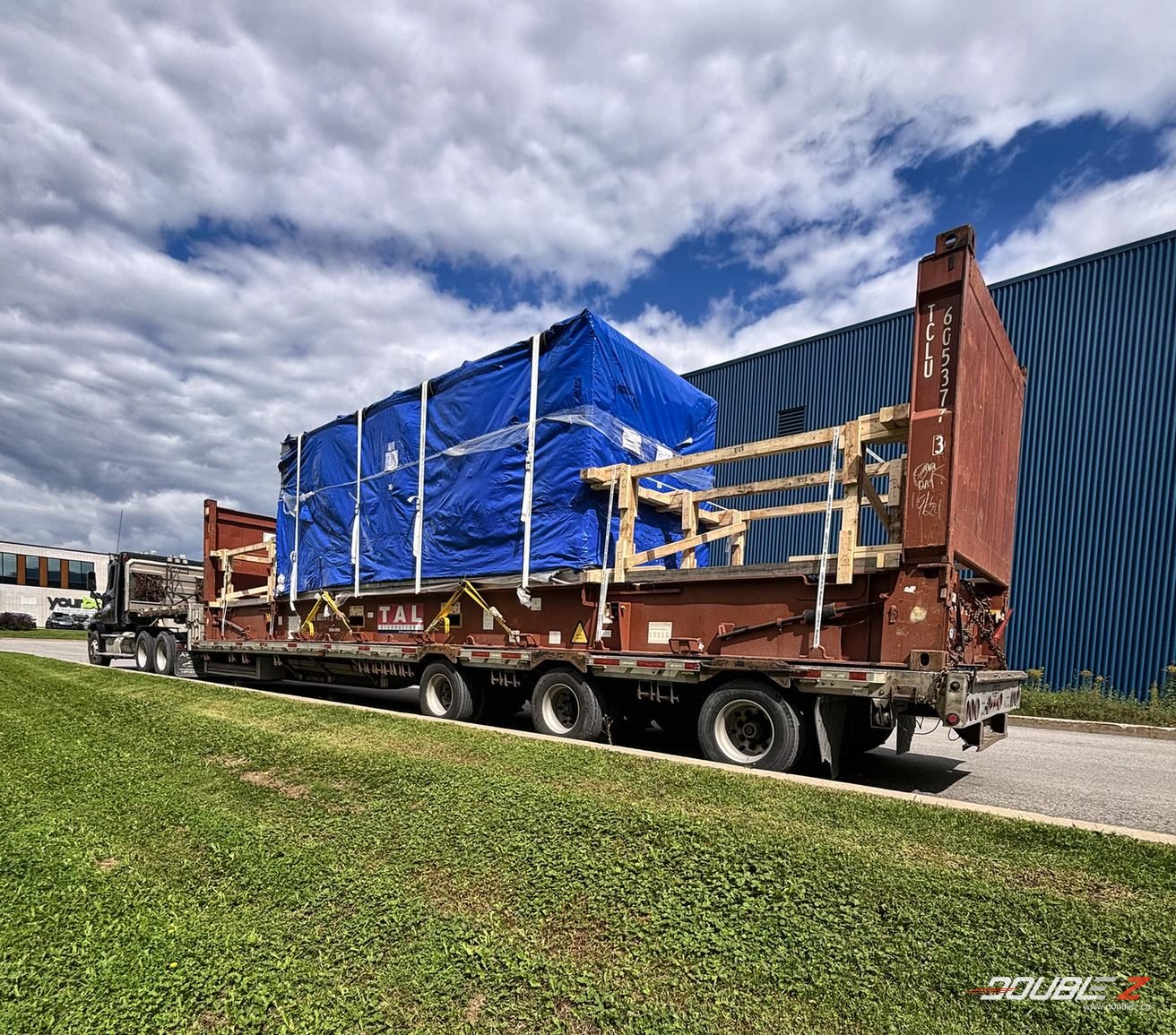
The pickup views and the completed-work photos were taken two days apart: the same flat rack, cargo and shipment. The opening truck photo and the stamped-wood and end-wall views show the completed work; the loose-tarp, close-up and unbraced truck views show the earlier condition.
Arrange the next step with Double Z
Send the refusal notice, container and booking numbers, cutoff, location, photos, dimensions and weight. Request a quote or call 514-375-4506. Our services include flat rack and open top handling, destuffing and drayage at MGT, Racine and Termont, specialized transport and storage and cross-docking. Timing depends on access, equipment, inspections and acceptance.
Related operations: damaged containers and destuffing and flatbed reloading.
Questions customers ask
Does every flat rack need a lashing certificate? Confirm with the booked line. Swire’s cited policy requires one; that does not establish a universal requirement.
Will stamped wood prevent another refusal? Not by itself. Phytosanitary compliance and a suitable support and securing design are separate checks.
Can you guarantee the cutoff? No. This shipment made it, but a new job needs its own confirmed correction plan, receiving window and approvals.
Fast quote
A load refused at the port, or a flat rack to prepare before the cutoff? Send us the booking and photos and we will tell you what it needs.